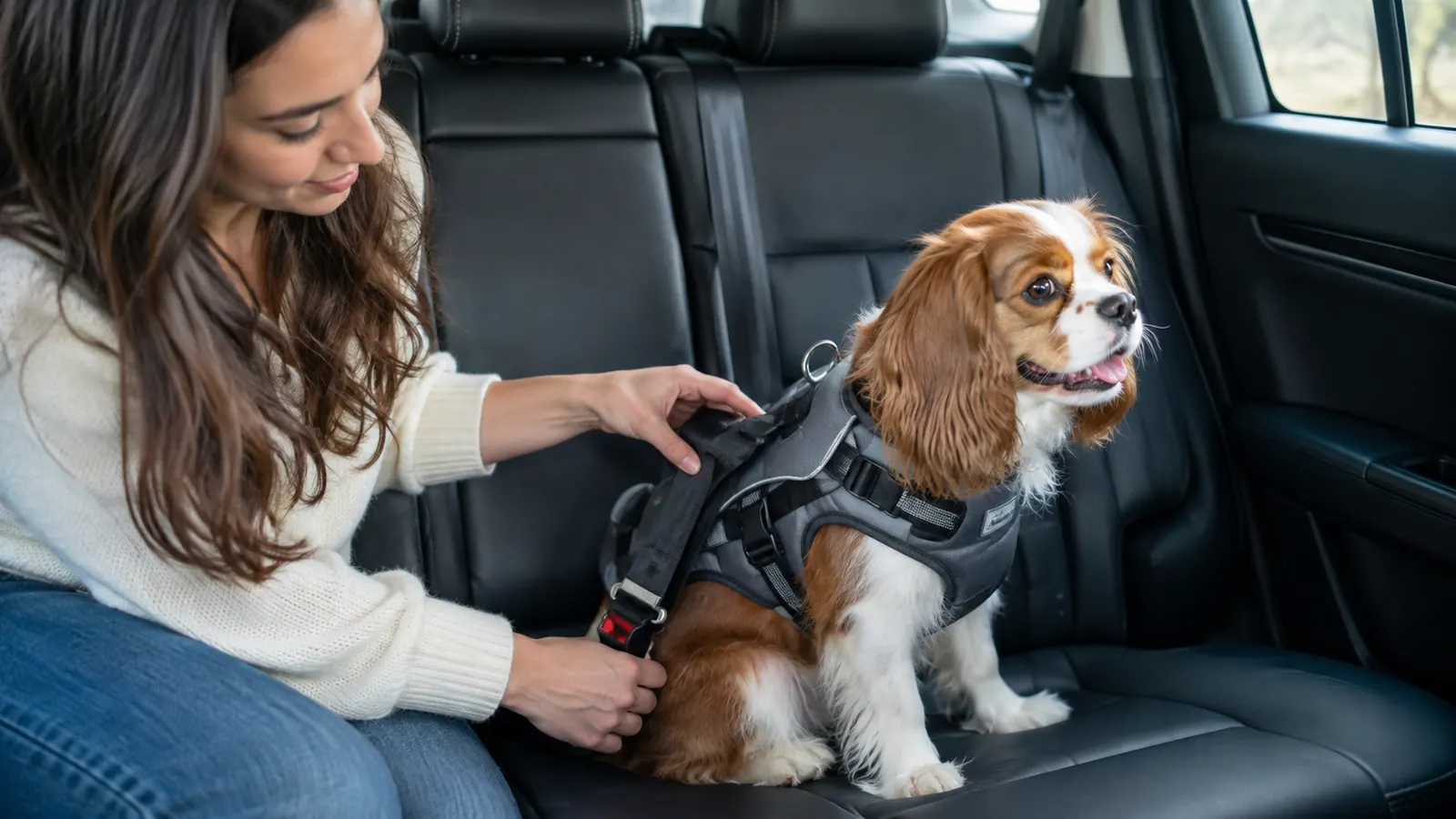
I bought the Kurgo Tru-Fit because it was the first crash-certified harness I found that did not look like a piece of luggage. At the time, Poppy was 3 and had already slipped two collars in a parking lot. I needed something she could not back out of, and Kurgo's front clip and three adjustment points seemed like the obvious answer. What I learned over the next two years is that a harness can pass a simulated crash test and still fail in a different way: by fitting so loosely that the dog is not actually protected when a collision happens. That is why I ended up comparing it side by side with the Sleepypod Clickit Sport in the back seat of my 2019 Honda CR-V.
Here is the short answer. The Sleepypod Clickit Sport offers better crash protection for a 6 to 8 lb dog because its harness wraps the chest with a compression-style buckle and relies on a rigid vehicle tether that anchors at the seat belt latch. The Kurgo Tru-Fit is a solid, comfortable harness for everyday walks and for short car rides with a dog closer to 12 lb or heavier, but the Tru-Fit small simply has too much strap for my tiniest dog. If you already own a 15-lb dog and want one harness for both walking and driving, the Kurgo is an honest choice. If you are shopping for a Yorkie, a Chihuahua, or another dog under 10 lb, the Sleepypod is the safer build.
| Kurgo Tru-Fit | Sleepypod Clickit Sport | |
|---|---|---|
| Crash evidence | Published lab-based impact testing for common sizes, with video and specs you can review before you buy. | Independent sled and rollover test data, engineered around federal child restraint principles, widely trusted by rescue groups. |
| Fit for dogs under 10 lb | The smallest Tru-Fit size runs long on an 8 lb dog; Poppy needed every adjustment point at its last hole. | Clickit sizing starts below 8 lb and the diagonal chest strap stays centered on a narrow ribcage. |
| Everyday use outside the car | Lightweight, front walk clip, fast to adjust, and comfortable enough for an hour-long neighborhood walk. Good for hiking. | Stiffer, more padded, and built around a seat belt tether rather than a walking leash; workable but not a trail harness. |
| Escape resistance | Snug with proper adjustment, but a determined dog can work free if the straps are not checked before every ride. | Diagonal straps and vest design give few paw holds, and the locking tether anchors at a single point that cannot be slipped. |
| Price and value | Lower list price and replacement straps are sold separately. | Premium price, and the dedicated vehicle tether is sold separately, so the real cost is higher. |
Where Kurgo Tru-Fit Wins
Let me start with what the Kurgo does better on any day that does not involve a collision. It is a genuinely good everyday walking harness. The front clip lets you steer a puller without wrenching its neck, and the padded chest plate spreads pressure when a dog lunges after a squirrel. On our normal morning walk around the block in Round Rock, Poppy wore it for an hour with no chafing under her front legs, and that is not something I could say about the four other harnesses I tried before this one. The straps move through metal ladders quickly, so I can put it on and take it off in under a minute, even when she is wiggling. The metal D-rings and thick webbing feel sturdy, and the hardware has not rusted after two Texas summers. One morning, when she spotted a rabbit and lunged, the front clip turned her toward me instead of letting her hit the end of the leash at full speed. That is the difference between a training harness and an ordinary one.
Kurgo's crash certification also matters if you drive a taller vehicle like my 2019 Honda CR-V. The company runs lab-based impact tests and publishes the video, which is more than most harness makers can do. That gives it a margin a non-certified harness cannot touch. Because the Tru-Fit has both a front and back clip, I can thread the factory seat belt through the back strap for a 15 minute vet run and still have a normal walking harness when I get out. On the days when Poppy rides to the groomer in the Kurgo, the transition takes thirty seconds and I never have to carry a second harness in the door. That versatility is the main reason I kept my first Tru-Fit in the car after I realized it did not fit my tiniest passenger the way I needed it to.
There is one more thing in the Kurgo's favor if your dog lives somewhere between 12 and 18 lb. A neighbor of mine has a miniature schnauzer named Gus who weighs 14 lb, and on Gus the small Tru-Fit fits like it was sewn for him. The front strap sits at the deep part of his chest rather than crowding his throat, the back panel is snug but not tight, and he does not try to pull it off with his back feet, which is how Gus tells me a harness is wrong. He rode with us to a trailhead near Lake Georgetown, about 30 minutes of back roads and one stretch of Interstate 35, and he slept through the whole ride. A harness that disappears like that is a safety feature by itself. If a restraint is uncomfortable, I will be tempted to leave it loose in the back, and a loose restraint is worse than none in a crash.
I also appreciate replaceable pieces. The Tru-Fit uses straps that move through ladder locks, so if Poppy chewed through a section, and she did once on a harness I hung too close to her crate, I could buy a replacement strap instead of a whole harness. That is less glamorous than crash ratings, but after a year of daily use it matters more than most specs. Sleepypod's construction is more like one continuous piece and harder to repair, which is a quieter reason to choose the Kurgo for a dog who is hard on her gear.
Where Sleepypod Clickit Wins
I know I just said the Kurgo fit Gus well. That is not the same as fitting my own dogs, and it is the reason I did not stop with the Tru-Fit. The Clickit Sport accommodates tiny dogs in a way the smallest Tru-Fit simply does not. Sleepypod's sizing starts below the eight pounds my Poppy carries, so the harness is not already in danger of being too big before I touch the buckles. It is cut with a diagonal chest panel that sits over the sternum rather than below the throat. Poppy has a short neck and a broad ribcage for her size, and a harness that slides up can put pressure right on her trachea. On the Clickit, the center ring stays in the middle of her chest where the tether connects. On the Kurgo, I had to cinch every adjustment so far that the front clip wound up under her jaw, which made breathing the first thing I thought about on every drive.
The difference showed up in a sudden stop two weeks into the test period. I was heading to the vet on Old Settlers Boulevard, doing about 35 mph, when a truck pulled out of a parking lot and I braked much harder than I wanted to. Poppy stayed put in the Sleepypod. Her body was held by the diagonal strap and the seat belt latch, and she barely moved forward. Later that week I did the same route in the Kurgo with Poppy, being careful to brake smoothly, and I still watched the top of the harness shift up an inch before it caught. I have never crashed a harness with my dog inside it and I never intend to, but that one hard brake was enough to put the Clickit in the permanent car position.
Sleepypod also documents its crash tests more thoroughly. The company publishes side impact and rollover test conditions, lists the dummies it uses, and explains what a pet harness can and cannot do in a real crash. I read the safety pages over two nights, taking notes, and I came away feeling like the designer had answered the same questions I ask: where will the buckle land, what happens to a small dog when the belt goes taut, which direction does the body move in a side hit. It treats the dog as a passenger who needs a restraint system, while many other harnesses treat crash certification as a sticker. I would rather buy protection from an engineer than from a marketing department.
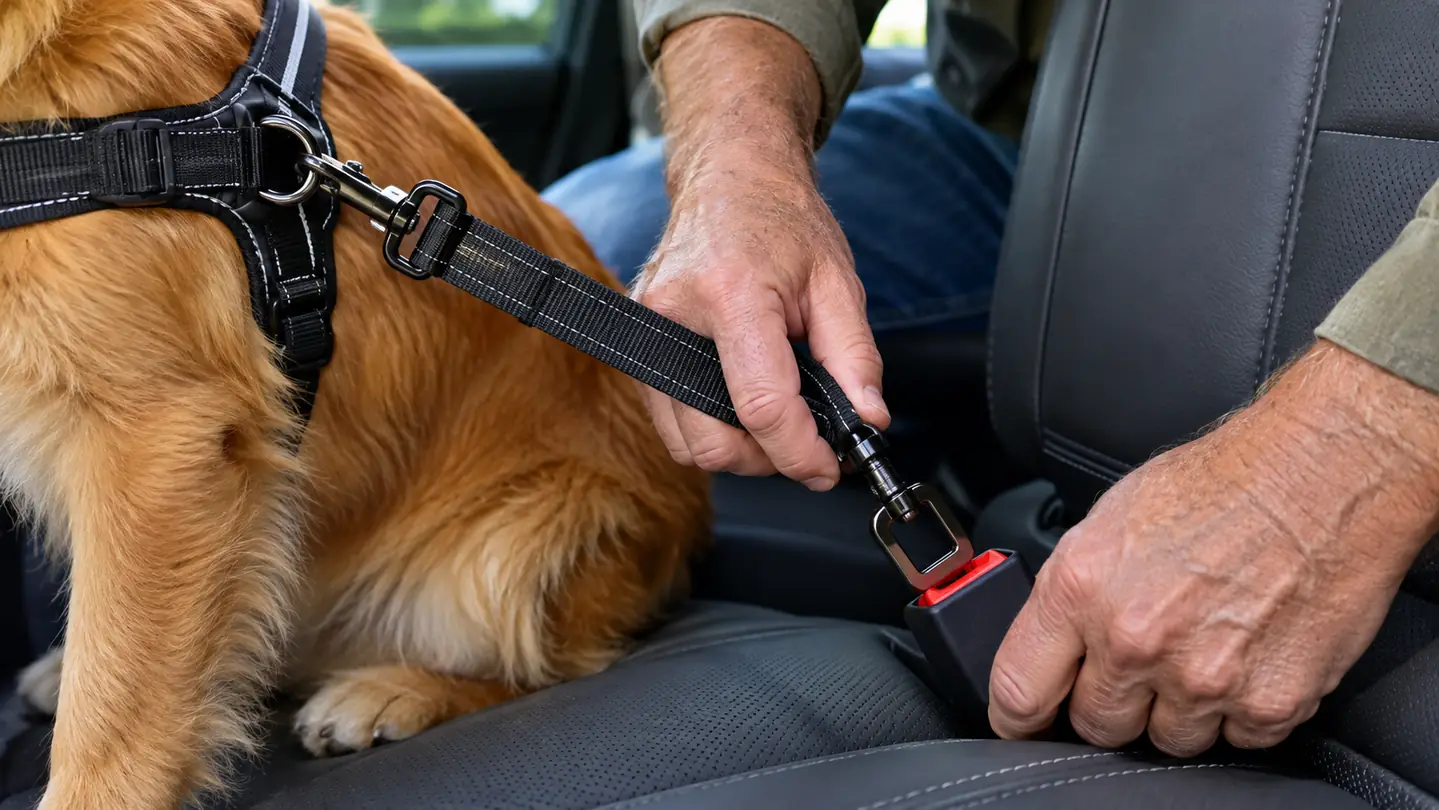
The Clickit's seat belt anchor also behaves differently. The tether clips directly into the seat belt receiver instead of looping around the belt, and the locking mechanism against the receiver holds the dog centered. With the Kurgo, I used the factory seat belt through the harness loop, and on the curved back road near our house the harness slipped from one side to the other. Poppy likes to curl up facing the car door, and that is exactly the position where side-to-side movement ends in a fall to the floor. Sleepypod's attachment kept her facing forward and centered on the seat cushion even on the sharp curve at the end of our street. That centering may sound like a small thing until you have watched a moving dog slide down a seat.
If you drive a dog closer to 15 lb, the Tru-Fit pulls double duty
The Tru-Fit works as a walking harness and a crash-tested restraint for the same money you would spend on two separate pieces of gear. Check today's price and shipping options to see if it fits your routine.
Amazon Check Today's Price on Amazon →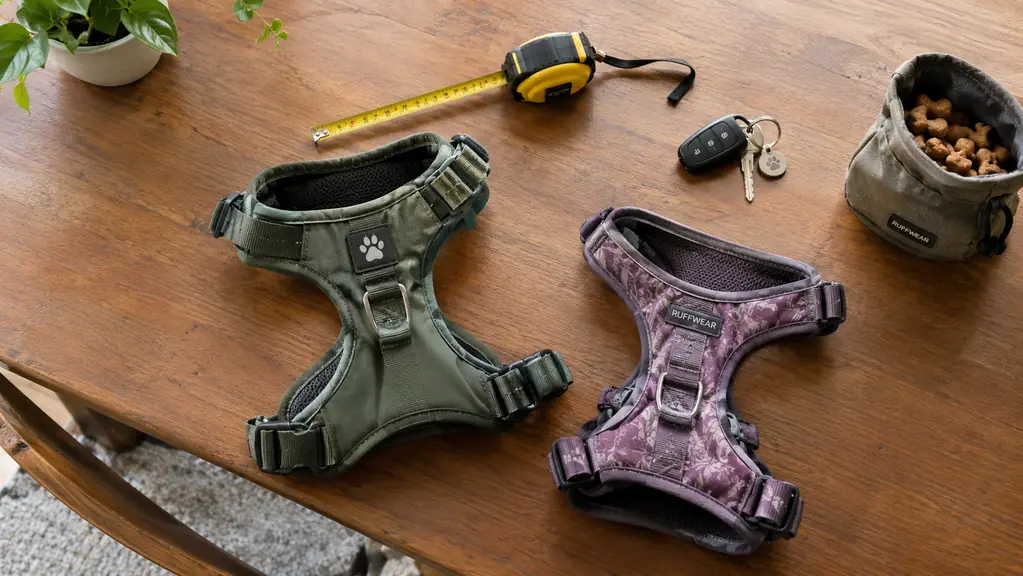
Who Should Buy Which
After three months with both, the answer is not as clean as saying Kurgo wins or Sleepypod wins. It depends on your dog's size and whether this is a harness you will take off at the trailhead or leave attached to the seat belt until you get home. Choose the Sleepypod Clickit if you drive a small dog under 10 lb, if you use highway miles, if you want the most independent crash evidence, or if your dog needs the kind of fit that comes from a vest shaped around a narrow chest. That is the harness I now buckle in the back seat for Biscuit, and I check it before every long road trip.
Choose the Kurgo Tru-Fit if you want one harness that works for daily walks and the occasional car ride with a dog in the 10 to 25 lb range. It is lighter, cooler in the Texas heat, stops pulling at the front clip, and gives you a crash-tested design for a lower price than the Sleepypod. If your dog is closer to 15 lb with a broad chest, the Tru-Fit can be adjusted to stay centered and secure, and you will not need to buy a separate walking harness for the trail.
Neither of these should be the only restraint you trust with a dog under 5 lb. The Sleepypod is easier to fit correctly than most, but you still have to read the manual and attach the tether exactly as shown. For Biscuit, who weighs 6 lb and has a delicate trachea, the Clickit is the first car harness I have felt good about. I still use the Kurgo for Poppy's Saturday walks around the lake at Berry Springs, but when the car is running she rides in the Sleepypod. That is my honest answer, and it is the reason I tell friends at the dog park to measure their dog's chest before they buy either one.
Do not buy either harness without measuring your dog's chest and neck and comparing those numbers to the size chart. The chart has to be the starting point, not the brand name. I measured Poppy, checked the chart, and still found the Kurgo small too long in the body for her. If you buy from an online store that does not accept returns on used harnesses, measure twice and choose the size that puts the front strap at the sternum, not at the throat. No amount of crash testing protects a dog who is wearing a harness one size too large.
Keep the Tru-Fit for walks, but buy the right restraint for your car
I still use the Kurgo every weekend. If your dog is the right size for it, it is one of the better convertible harnesses you can buy. See the current listing for size options and today's price.
Amazon Check Today's Price on Amazon →