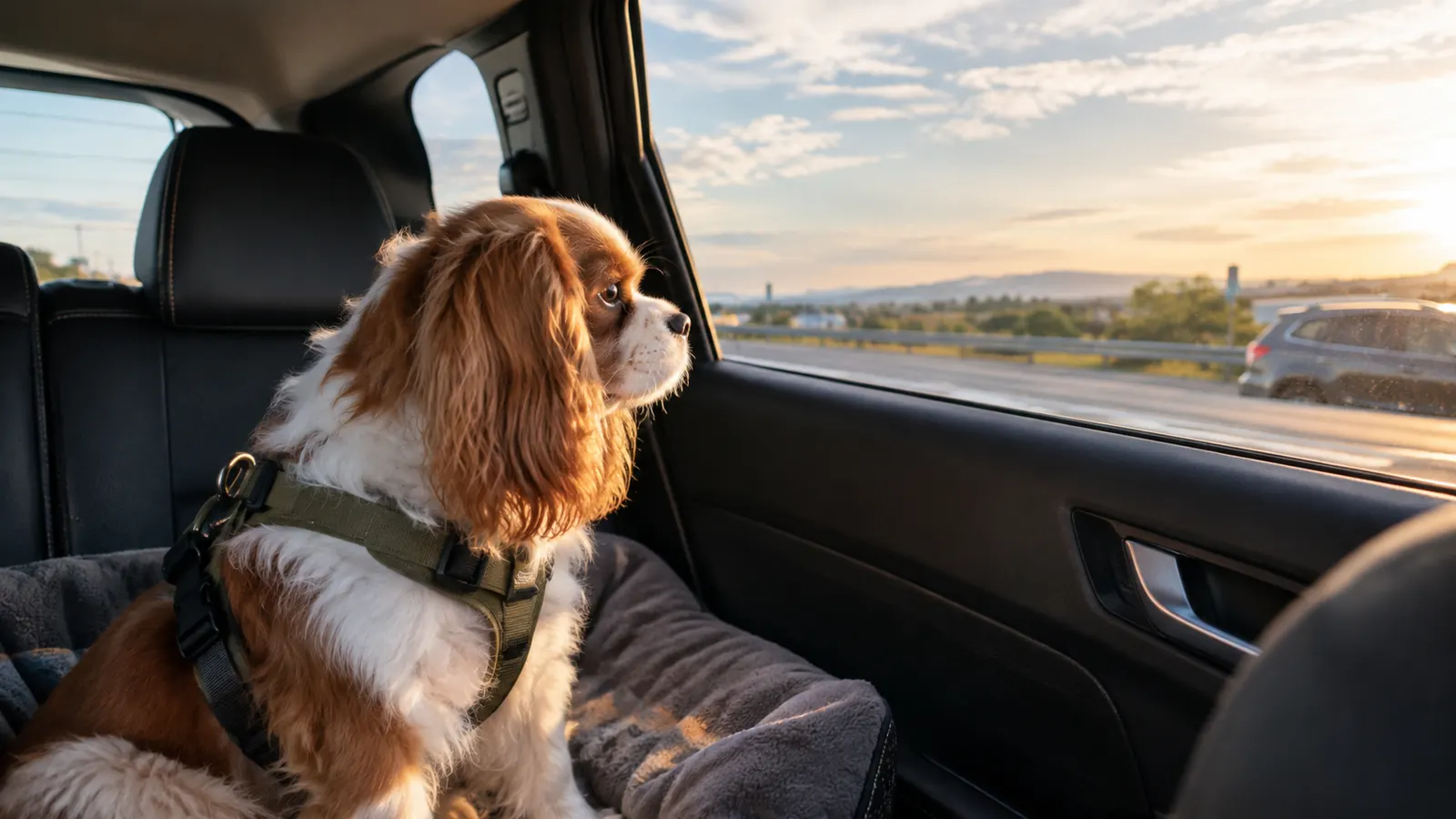
Every time I buckle Biscuit into his car harness, I picture the rest stop outside Amarillo where Poppy slipped her collar and ran through the fuel lanes. It took twenty minutes and the help of a truck driver to catch her. That collar went into the trash when we got home, and I started looking for a harness that a panicked 8 lb Yorkie could not back out of. I measured both dogs, read the crash-test data, and ordered the Kurgo Tru-Fit for Biscuit and the same model for Poppy. A year later, both are still wearing it.
This review is not a first-week impression. Since last March, the Kurgo Tru-Fit has gone with us from Round Rock to Colorado Springs, down to the Gulf Coast twice, and on vet visits, school pickups, and Saturday errands too numerous to count. It has also been through one emergency braking event on I-35 that I will describe later. My hope is that this long-term view helps you skip the trial-and-error that I did not manage to skip.
The Quick Verdict
After about 4,000 miles and twelve months of near-daily use, the Kurgo Tru-Fit is the harness I reach for first. It fits Biscuit's 6 lb frame without shifting, holds Poppy when she tries to climb, and has survived real highway driving. The fit is fiddly, and the first setup requires patience. As a car restraint for a small dog, it works.
Amazon Check Today's Price →Skip the trial-and-error I went through
The Kurgo Tru-Fit is crash-tested, washes well, and fits two Yorkies of completely different shapes from the same size. Measure your dog's chest and read Kurgo's fit guide before the harness arrives; the five adjustment points matter more than the listing photo.
Amazon Check Today's Price on Amazon →How I've Used It
My test started with a decision: Biscuit rides in the back seat of my 2019 CR-V on every trip, even three-minute errands. A habit only sticks if it is used every time. Poppy comes along on longer drives, so she got the same model in Small and her own set of settings.
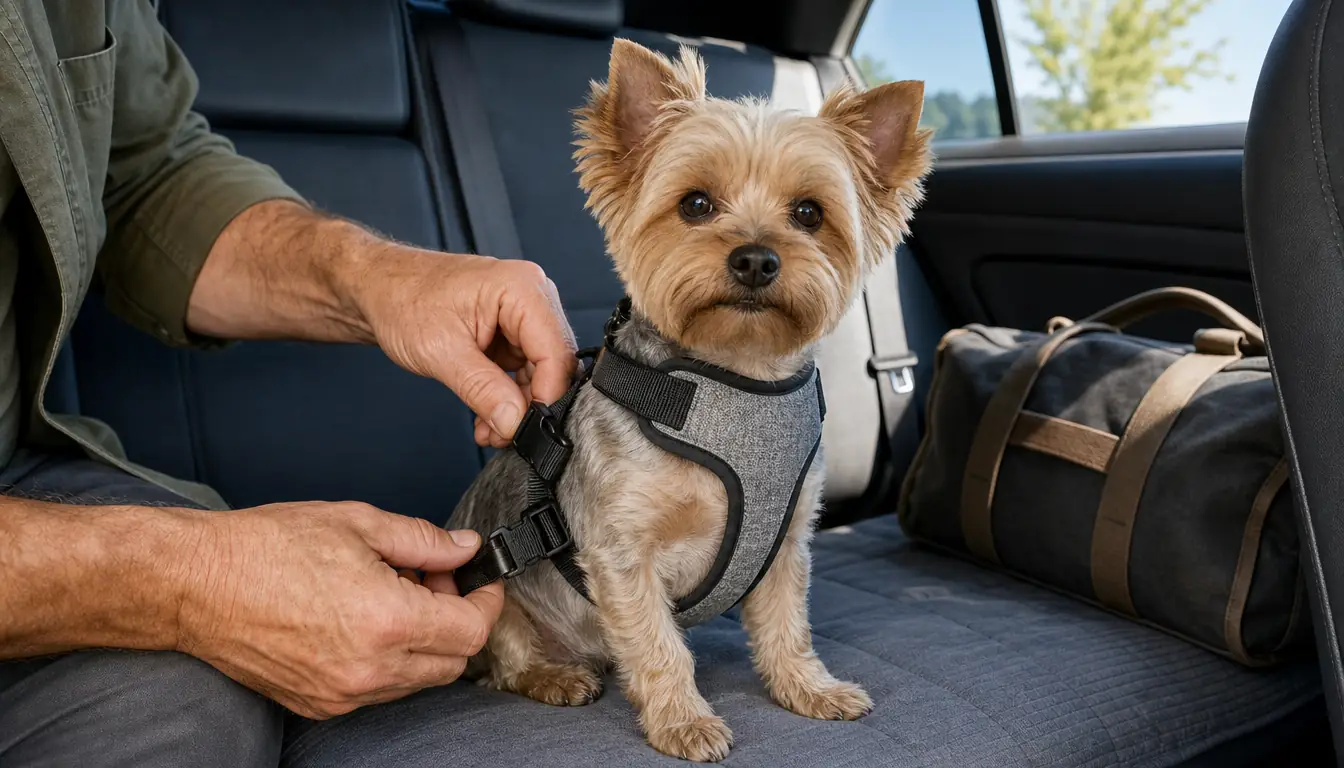
First fit took longer than I expected and failed twice. I put the harness on Biscuit without opening the manual, and the front panel sat too low. He stopped walking and began chewing the belly strap. I took it off, watched Kurgo's fit video, and started over. The front panel has to sit at the widest point of the chest, with the belly band behind the elbows. When I got it right, Biscuit stopped acting like he was wearing anything.
Now I put him into the Tru-Fit before he jumps in the back seat. I thread the seat belt through the loop on the harness exactly as the instructions show, buckle it, and pull the slack out until I can slip two fingers under the chest strap. Once a week I inspect the webbing and buckles. That routine has not changed in a year.
Machine washing happened after a mud puddle outside Durango. Biscuit came back to the car coated in brown, so the harness went into the wash with a small load of towels. Cold water, hang dry, no dryer. The straps came out clean, the padding kept its shape, and the buckles clicked the same way they had before.
What the Crash Test and the Stitching Tell Me
I am not a crash engineer, but I know that a dog loose in an SUV at highway speed is dangerous to the dog and to me. The Kurgo Tru-Fit is sold as crash-tested, and the design details behind that claim are visible. The chest panel is wide, so a sudden stop presses against a broad surface instead of a thin strap. The stitching at the stress points is reinforced. The attachment point is metal, not plastic.
A weak harness can be worse than no harness, because a dog can twist inside it and end up with a strap across the throat. The Tru-Fit's wide front panel sits low on the chest by design, and the five adjustment points are there to keep it there. After a year of use, I can pull on the harness from the driver's seat and feel that the structure is still solid. The webbing has not gone soft, the seams have not pulled, and the anchor point does not flex.
The label is not a promise that every crash will end well. It means the harness has been tested under sled forces and held together, which is more than I can say for the no-name harness I owned before. I still drive defensively, but I no longer worry about Biscuit becoming a projectile in a panic stop.
The morning that made me a believer happened on I-35 near Waco. Traffic ahead braked without warning, and I hit the brakes hard enough that a full coffee cup slid out of the holder and rolled under the passenger seat. Biscuit was lying down, and he did not move. Poppy, who had been sitting up with her front paws on the armrest, pitched forward a few inches, but the Tru-Fit kept her on the cushion. Neither dog left the seat. I pulled over at the next exit and checked the harness before I could breathe again. The front panels had not moved.
Fit: Two Dogs, One Harness Model
Biscuit is a 6 lb Yorkie with a narrow chest and no interest in being dressed. Poppy is an 8 lb Yorkie who is broader through the shoulders and convinced every piece of gear is a chew toy. They both wear the Small size, but the settings on the Tru-Fit could not be more different. I keep a soft measuring tape in the glove box because Kurgo's sizing chart asks for chest girth, not weight.
When I first fitted Biscuit, the belly band slid toward his back legs. I loosened the chest strap, tightened the belly strap, and pulled the rear adjusters until the front panel stayed centered. It took three attempts before he stopped trying to chew the strap. On Poppy, the same settings made her walk like a toy soldier because the chest strap was too tight. I loosened the chest and tightened the belly band almost all the way.
After that first weekend, I still check the fit before long drives. The five adjustment points shift once a dog lies down for a few hours. On Biscuit the belly band rides up; on Poppy the front panel slides toward one shoulder. Fixing it takes thirty seconds. On a trip from Round Rock to Colorado, I checked at the first rest stop, found Biscuit's belly band half an inch out of place, moved it back, and it stayed put for the rest of the day.
The rule I use is simple: the chest strap should sit where I can lay two fingers flat underneath without having to force them, and the harness should not twist more than a few degrees when I pull it. That rule has worked for both dogs. It also means the harness is tight enough to do its job without rubbing a crease into their skin.
What I Tried Before the Tru-Fit
Before I settled on the Kurgo Tru-Fit, I tried two other ways to keep Biscuit in place. The first was a basic harness from a big-box pet store that claimed car safety but really only had one clip and a strap. It slipped sideways on Biscuit after a couple of corners, and the seat-belt strap rubbed a raw spot on his shoulder. The second was a padded vest-style harness a friend lent me. It was comfortable for walks but had no clean way to attach to the car's seat belt. I would have had to thread the belt around the outside of the vest, which did not hold him.
The Tru-Fit solved both problems. Five adjustment points let it match Biscuit's narrow chest, and the back anchor point gave the seat belt a stable place to do its job. Since I made the switch, I have not once caught the harness riding up around his neck. That alone is worth the extra setup time.
The salesperson at the big-box store could not tell me whether that first harness had ever been tested in a car. That silence told me as much as any label. I did not blame him; I blamed the industry for selling car safety as a feature instead of a standard.
What Wore Out and What I Would Change
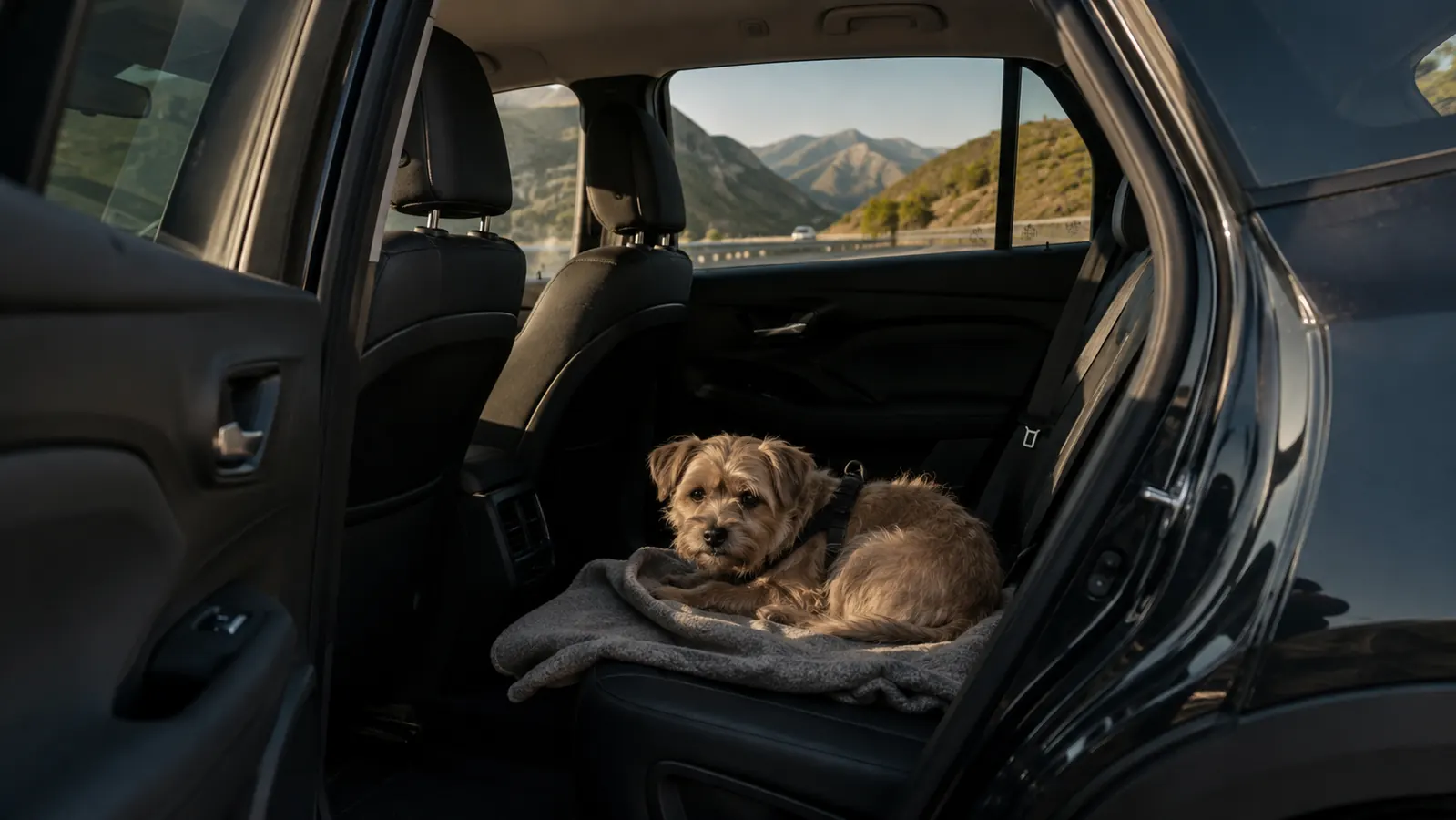
After roughly 4,000 miles, most of the harness still looks like new. The webbing has a few pulled threads where Poppy grabbed the belly strap during a stop in New Mexico, but the structural stitching is intact. The plastic adjusters have not cracked. The buckles still snap with the same firm click. The loop that carries the seat belt shows light rubbing but no fraying.
At the six month mark, I spread every strap out on the kitchen table and looked at each seam with a bright light. I found one loose thread near the chest panel and trimmed it. I did not find any place where the heavy stitching had started to unravel. That is the sort of thing I look for in a piece of safety gear, and it is why I trust this one.
What I would change is the learning curve. The Tru-Fit is not the type of harness you can put on a dog in a parking lot and trust. My first fitting took twenty minutes, and I have read enough reviews from people who skipped the manual to understand why some say it shifts. The harness needs an owner who will follow the fit video and then repeat the adjustments. The belly strap release also needs two hands when Poppy is wiggling, which is annoying but not a deal-breaker.
One other honest note: the Tru-Fit is not a chew-proof harness. Poppy has put two small nicks in the chest webbing during a long stop, but neither nick is deep enough to weaken the strap. I still do not leave her in the harness when the car is parked and she is bored. The biggest long-term issue is my own habit: the harness only protects if it is on, so it goes on before the car door opens every time.
What I Liked
- Crash-tested, with a padded chest panel that stays off the throat
- Five adjustment points let it fit both a narrow Yorkie and a rounder one
- Washes clean and dries fast after mud and rain
- Reinforced stitching and solid buckles after a year of weekly use
- Can double as a walking harness on flat ground
Where It Falls Short
- First setup is fiddly and takes a patient twenty minutes
- Needs periodic re-tightening because the belly band can ride up
- Restraint only works if you actually put it on before every ride
The moment that convinced me happened on I-35 near Waco. Biscuit stayed planted, Poppy stayed on the cushion, and I had to pull over just to calm myself down.
Who This Is For
If you drive a small dog in a car more than once a week, the Kurgo Tru-Fit is worth your time. It works with the factory seat belts in my 2019 CR-V, no special seat needed. It is also for anyone who has watched a dog slide sideways on a leather seat during a turn and thought, that could have been bad. A crash-tested harness turns that worry into a habit.
It is also for owners who will read the fit instructions and then check the fit again after a few hours. The Tru-Fit rewards patience. I use mine daily, and it still fits Biscuit as well as it did in March. If you are willing to spend the setup time, it should last you through years of highway miles, not just a season of errands.
Who Should Skip It
If your dog is still growing, skip it for now. A puppy that will double in size will outgrow the Small size in months, and a loose harness is not a safe harness. A growing dog needs a temporary restraint that you measure against its chest every few weeks, or a harness with more room to grow.
If your rides are always two blocks at low speed and you are not willing to adjust straps before driving, a padded booster seat or a simple travel carrier may meet your needs better. The Tru-Fit is at its best on highway miles and repeated trips, not as a casual accessory. That is not a fault. It is just a sign that you should match the tool to the driving.
The crash-tested harness that rode with us for 4,000 miles
The Kurgo Tru-Fit has earned a permanent spot in the back seat of my CR-V. Measure your dog's chest, check today's price on Amazon, and give yourself twenty quiet minutes for the first fitting. It is the kind of gear you hope you never have to depend on, until the day you are glad you did.
Amazon Check Today's Price on Amazon →