The first seatbelt I bought for a dog took forty seconds to install and about ten to fail. Poppy, my eight-pound Yorkie, slipped right under it on the way home from the vet when another driver cut me off, and she ended up on the floor of the back seat before I had finished braking. We were only doing about thirty miles an hour. Nothing was hurt that day, but the box for that seatbelt never mentioned a crash test, and the more I looked, the fewer of the cheap ones did.
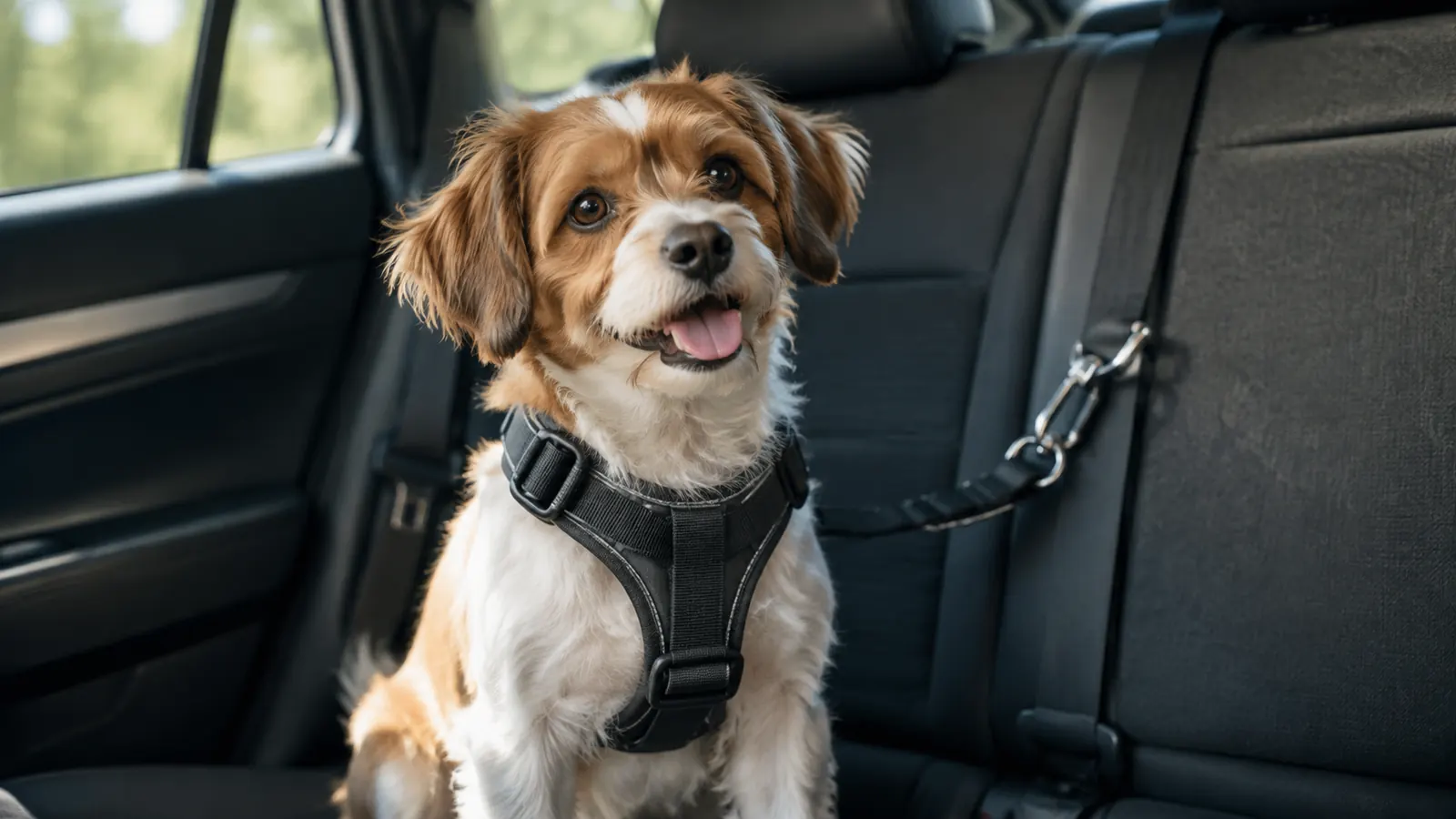
That afternoon I ordered the Kurgo Tru-Fit crash-tested harness, the one my two Yorkies ride in now. Biscuit, my anxious six-pound boy, can see me from his spot in the back seat when he is clipped in, and Poppy, who can slip any collar, has not come loose on the road once since. This list is the ten reasons crash-test certification is the part I refuse to skip.
Make the car ride the crash-tested choice for your small dog
The Kurgo Tru-Fit is a crash-tested car harness with enough adjustment for a six-pound Yorkie or a determined eight-pound escape artist. It comes with the tether that connects to your seatbelt, and it has held up through every trip I have taken since.
Amazon Check today's price on Amazon →A dog seatbelt can skip the crash test entirely
The seatbelt that failed me was a strap with a clip, and its packaging did not mention a crash test. Nothing requires it to. Crash testing is voluntary, expensive, and uncommon, so the words only appear when a company has actually done the work. When I bought the Kurgo Tru-Fit, the certification was stated plainly, and that sentence mattered more to me than any photo of a smiling dog.
Six pounds becomes much heavier in a sudden stop
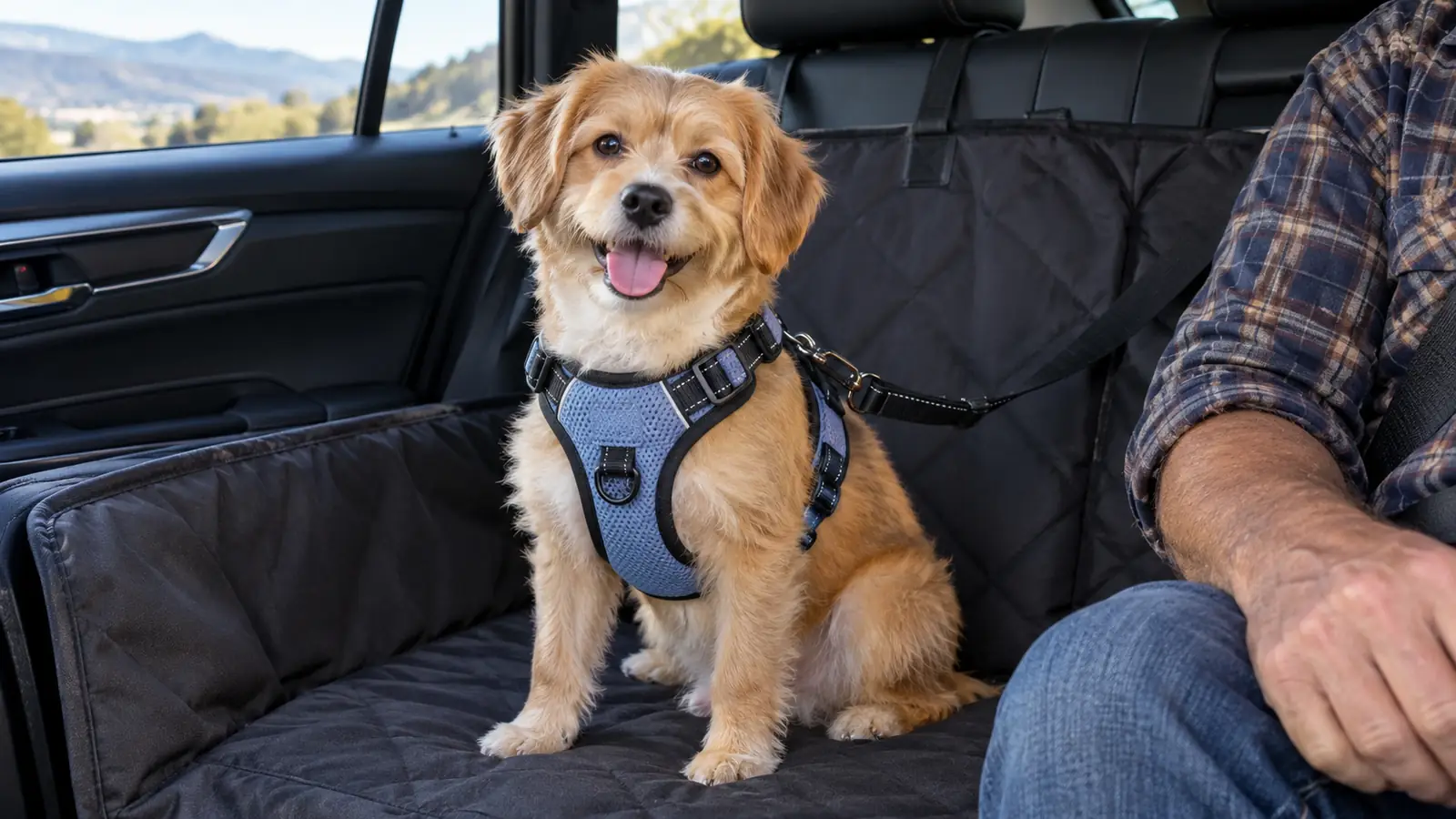
Biscuit weighs six pounds, and I can pick him up with one arm. But in a sudden stop he does not weigh six pounds. His body keeps moving at the speed the car was traveling, and momentum does not care how carefully I drive. That is why he never rides loose in my lap and why the harness is clipped to the car instead of relying on my reflexes. Reflexes do not survive a crash.
The test covers the whole system, not just a strap
A crash test matters because it checks the clips, the straps, the seams, and the way they all work on a body shaped like a dog's. The first seatbelt I owned held a strap just fine, but it told me nothing about whether that strap would hold Poppy. A crash-tested harness has been evaluated the way it is actually used, not as a piece of hardware hanging from a hook.
A good fit is what keeps the harness on when it counts
A harness only works if it is still on your dog at the end of the crash, and fit decides that. Poppy can back out of a loose collar in seconds, so I measured both dogs before I bought their Tru-Fits. We own two, because a harness is not something you share, and even though the tag says the same size, Biscuit's straps sit at a different tension than Poppy's. Taking the time to adjust each one is the difference between a safety device and a costume.
The tether is part of the safety system, not an extra
The Kurgo Tru-Fit arrives with its own tether, the piece that connects the harness to the seatbelt in the back seat of my CR-V. I set the length so each dog can stand, lie down, and look at me, but cannot climb over the console. A tested harness connected the wrong way is just expensive webbing, so I treat the tether as part of the safety system rather than an accessory to lose in the glovebox.
The back seat is the right seat, but only when the dog is secured
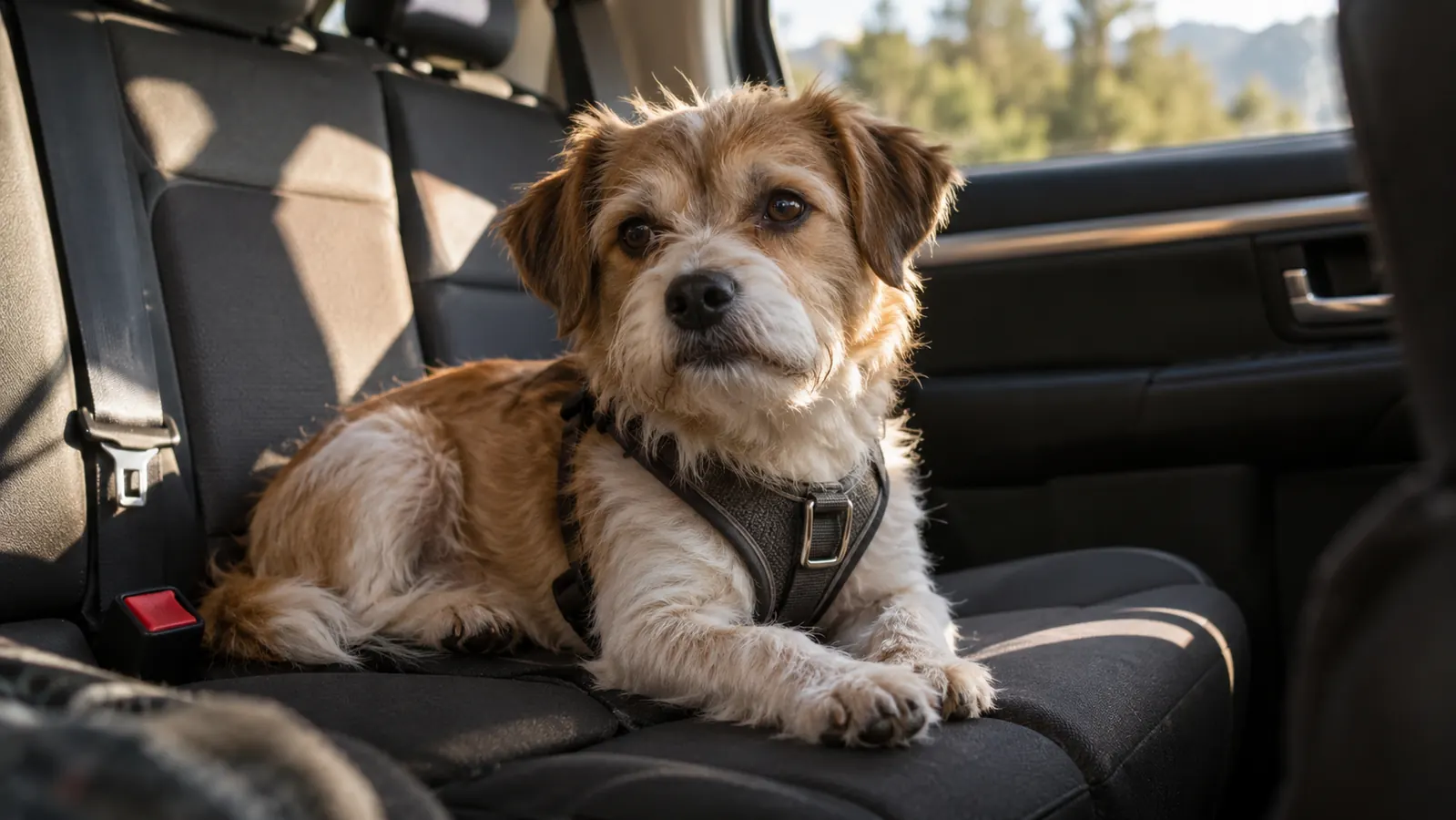
Neither of my dogs rides in the front seat, because an airbag that protects a person can hurt a small dog. The part that surprised me is how many people assume the back seat is automatically safe. An unsecured dog in the back can still hit the front seats or the doors in a crash. The Kurgo Tru-Fit is what makes the back seat the protected place we all assume it is.
Long trips multiply the chances, so we drive prepared
Last fall the dogs and I drove from Round Rock to Colorado, about fourteen hours on the road each way. No emergency happened, and that is exactly the point. The longer you drive, the better the odds that you will hit one moment of hard braking or worse. I would rather have a tested harness for fourteen hours of travel than an untested clip for a two-block trip to the groomer.
An escape artist never cares that the car is moving
Poppy has slipped loose collars, harnesses that fit her wrong, and the first car seatbelt I bought. It is funny in a parking lot and terrifying on I-35. The Tru-Fit has a fit she cannot back out of, and after years of watching her try on every walk, I trust it. Escape artists do not stop being escape artists because the car is moving, so the restraint has to do the arguing.
It earns its place by working on everyday walks too
The safest harness in the world protects nobody if it stays in a drawer because it is annoying to put on. The Tru-Fit is the harness my dogs wear for a walk around the block and for a drive across the state, so it is already on them the moment we decide to leave. That habit is what makes every other feature mean something. A harness you actually use is better than a perfect one you leave behind.
A real crash test is somebody else's lesson
When a product is crash-tested, it means the hardest moment already happened in a lab with a dummy, not on a road with Biscuit beside the window. That is the whole value of certification. I do not want to find out what my harness does in a collision. The test is the proof that the design has already been through the moment I am hoping never to experience.
What I'd Skip
What I would skip is any car restraint whose listing proves nothing. Look for the actual words: crash-tested, certification, or a named testing protocol. If a product page is full of photos of calm dogs and empty of those words, it probably was never tested. I would also skip the front seat entirely, even with a harness, because an airbag is not designed for a small body. And I would skip the idea that a short trip means a loose dog is fine. A five-minute errand can still end in a thirty-mile-per-hour mistake.
The worst moment of a crash already happened in a lab with a dummy, not on a road with Biscuit in the back seat.
Tested once, so my small dogs never have to be
Before you buy any car restraint, check for the words crash-tested. The Kurgo Tru-Fit has it in the name because it is the detail that matters. Both of my dogs ride in one on every trip, and I would not go back to guessing.
Amazon Check today's price on Amazon →