Some lessons arrive quietly. Mine showed up at 55 miles an hour on a clear Tuesday morning when the car in front of me locked its brakes. My 2019 CR-V stopped hard enough that the coffee in the cup holder jumped, and in the back seat Poppy did not stop. She flew off the seat, caught her shoulder on the center console, and let out one sharp yelp before I could say her name.
Poppy is five years old and weighs 8 lb. She is small enough to lift with one hand and bold enough to try climbing anything. For years I let her ride loose because she loved the window and I told myself a little dog in the back seat was not the same risk as a child. That Tuesday I watched her hit plastic with a sound I still remember, and I started paying attention to what keeps a small dog in place.
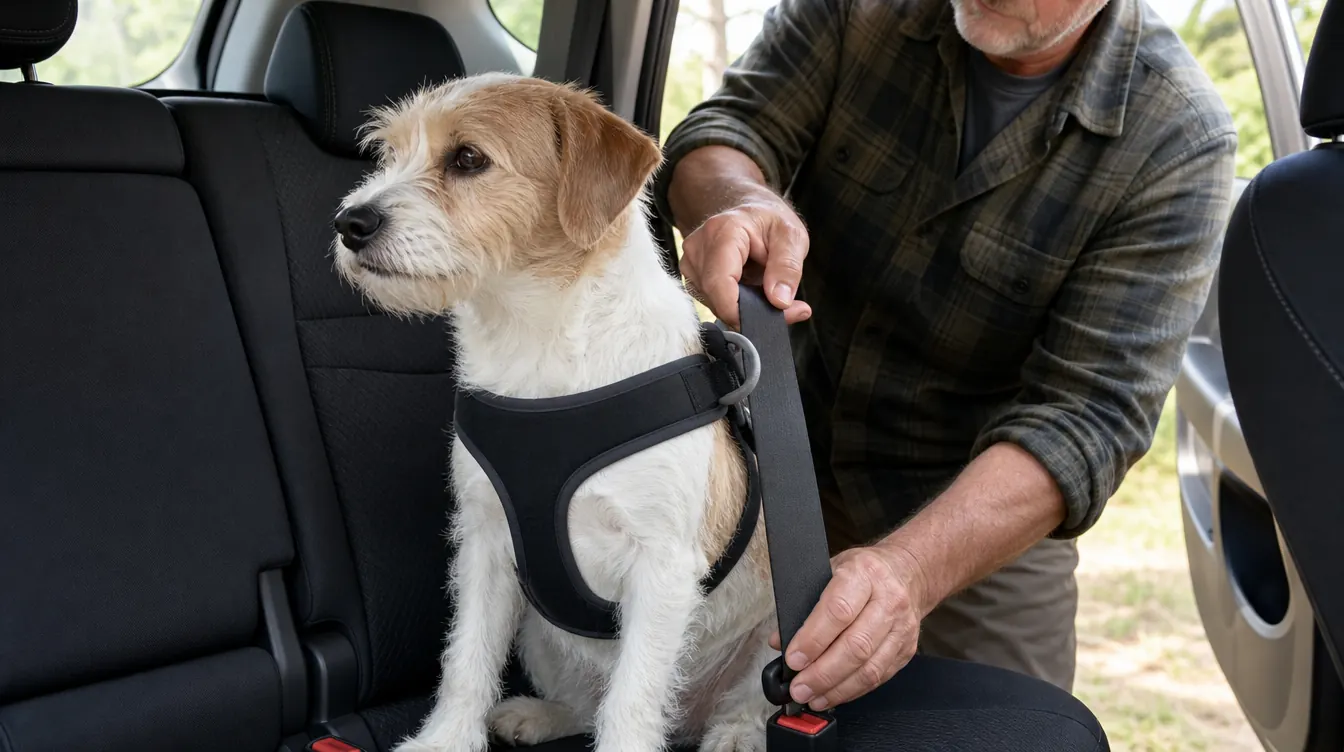
I tried a soft carrier first, but Poppy cried until I unzipped it. A basic walking harness felt safer than nothing, until I realized a walking harness can stretch and twist. That was when I started reading crash testing. Kurgo kept appearing in the results, especially the Tru-Fit Smart Harness, because it is crash tested and engineered for dogs in the car. What convinced me was the belt path: the seat belt goes through the harness loop and clicks into the car's own buckle, so the car holds the harness instead of a clip holding the dog.
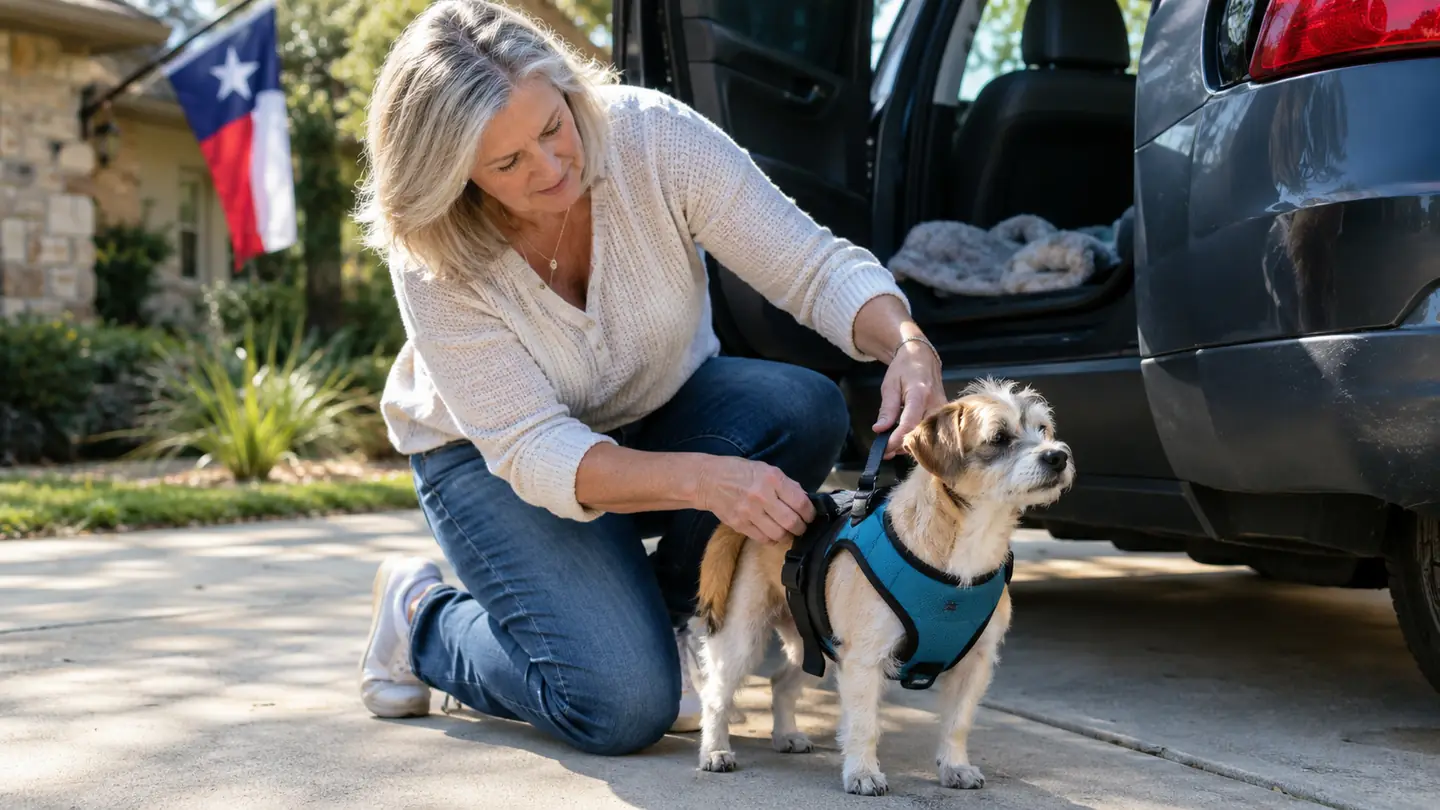
I bought the small size for Poppy. The fit took longer than I expected, maybe ten minutes the first time, because the Tru-Fit adjusts in five places. My first attempt was too loose. On the second try I cinched the chest strap and the belly strap until I could fit two fingers flat under each one. Poppy trotted around the living room, tried to roll on her back, and then seemed to forget the harness was there. That is exactly what I wanted. A harness she stops noticing is one I will actually use.
I did not really trust the harness until the day I had to brake for a merge on I-35 and Poppy stayed on her side of the back seat.
Make the change before your dog needs it
The Kurgo Tru-Fit Smart Harness was the first one that checked every box for Poppy. It is crash tested, it adjusts around a small chest, and it clips into your car's regular seat belt in about a minute.
Amazon Check Today's Price on Amazon →The first drive after the harness arrived was short, just errands in Round Rock. Poppy grumbled once at the belt click, then put her chin on the armrest and watched the neighborhood. The more we used it, the more the routine sorted itself out. I buckle the seat belt, give the harness one tug to check tension, and she settles instead of pacing from one window to the other.
By the second week I ordered a second Kurgo Tru-Fit for Biscuit, my nine-year-old Yorkie. Biscuit only settles in the car when he can see me, but he was sliding into the door when I turned, and that was not fair to him. He still watches me from the back seat, but he no longer slides sideways when I brake for the drivers who treat I-35 like a race track. Knowing both dogs are anchored changed how I drive, too. I stop looking in the mirror to check on them and keep my eyes on the road.
The real confidence came on a forty-minute highway run to see my sister near Austin. I had to brake hard twice, once for a state trooper on the shoulder and once for a line of cars at an exit. Each time I glanced in the rearview mirror and Poppy was exactly where I left her. No slide, no scramble, no yelp.
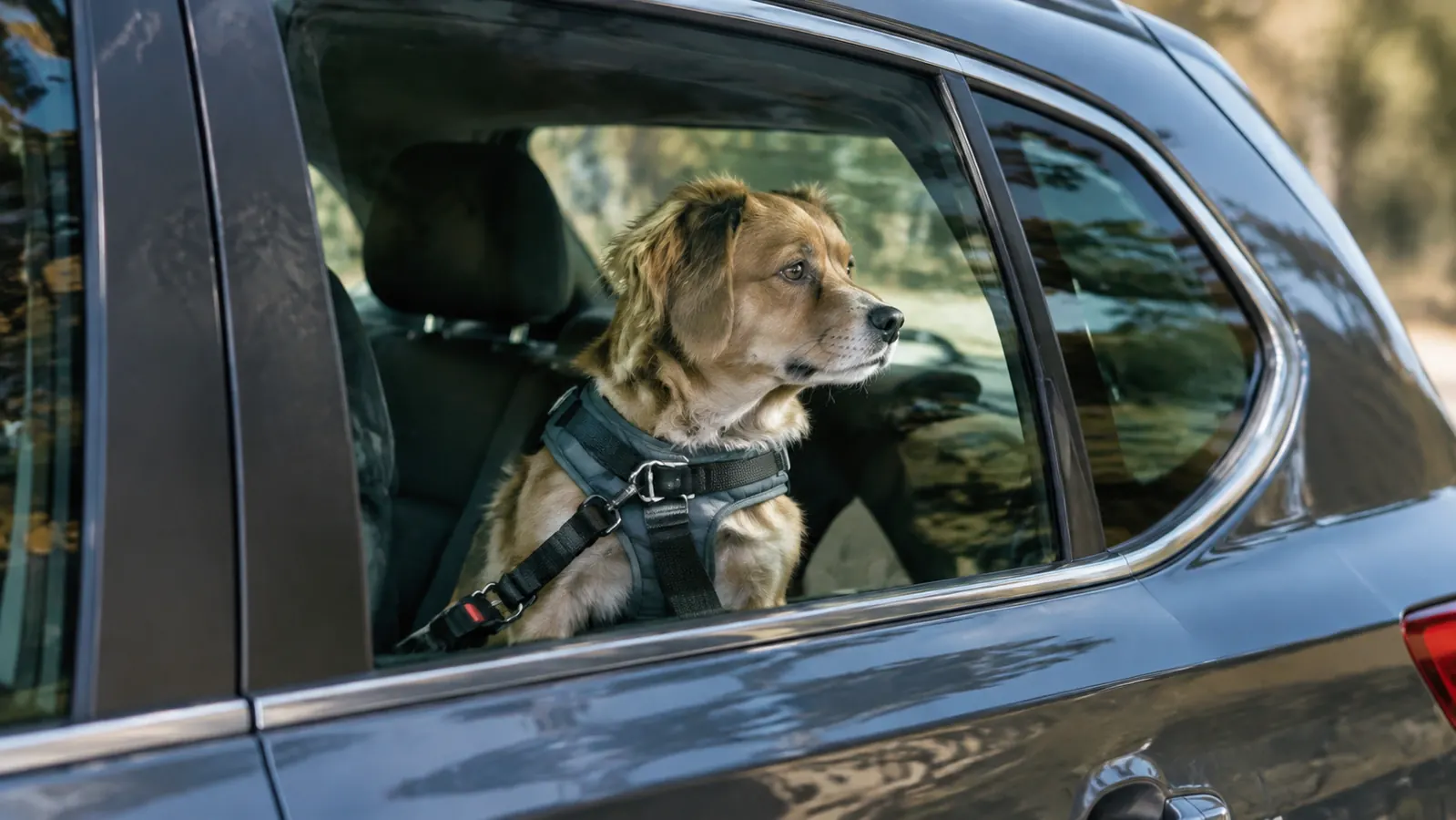
What changed is not that Poppy loves her harness. She would rather be loose, and she tells me so. What changed is that I stopped replaying that first sound every time I drove. The harness is not a cage and it is not a punishment. It is the difference between a dog who is part of the drive and a dog who is loose cargo if something goes wrong.
What I'd Tell You If We Were Sitting at My Kitchen Table
This is the part where I tell you what I wish someone had told me. Buy the crash-tested harness before the scare, not after.
Do not trust a walking harness for a car ride. Walking harnesses are made for walks, which means they stretch, twist, and ride up over time. A crash-tested harness is built to hold its shape in a sudden stop and to transfer the force to the seat belt instead of your dog's neck. Look for the words crash tested on the package or listing, and check that it clips into the car's own seat belt rather than relying on a tether hook.
Fit it indoors before you need it. Put the harness on your dog when the car is parked and the house is quiet. Tighten the straps until you can slide two flat fingers under each one, then run the seat belt through the harness loop and click it into the buckle. The belt should cross the chest, not the throat. Let your dog walk around the kitchen wearing it for a few minutes so the wriggling happens when you can fix it.
And if your dog is small, do not assume small means low risk. On the road my 8 lb Poppy has exactly the same momentum problem as a much bigger dog, just with less body to absorb it. The best time to make this change is before your own Tuesday morning arrives.
The harness I wish I had bought sooner
The Kurgo Enhanced Strength Tru-Fit Smart Harness is the one I trust for Poppy. It is certified crash tested for automotive use, it cinches down around a small chest, and it clips into the seat belt your car already has. Check today's price and the size guide to find the right fit for your dog.
Amazon Check Today's Price on Amazon →