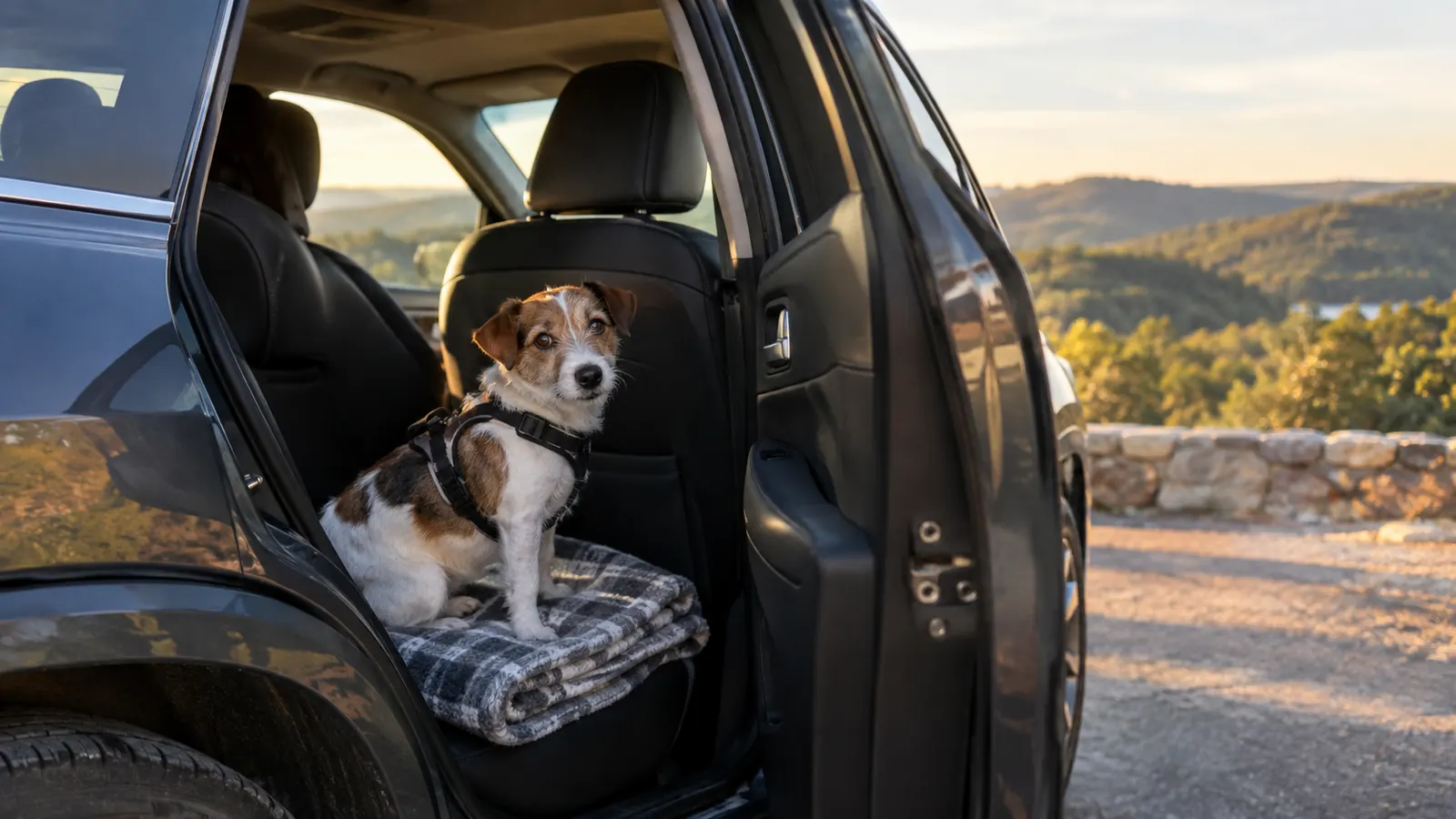
Here is what nobody tells you about a crash-tested dog harness: the test is run with a perfect fit, on a sled, with a dummy that does not wiggle. Your dog is not that dummy, and your back seat is not that laboratory. I learned the difference with Poppy on a Tuesday morning in my driveway in Round Rock, when I rushed the setup, routed the tether wrong, and spent a full week convinced the Kurgo Tru-Fit was overpriced plastic. The harness was not the problem. Still, it took one exchanged size and three practice fittings before it worked the way the reviews promised, and that is the part almost nobody writes down.
Poppy is my five-year-old Yorkshire Terrier, eight pounds, and she climbs. Biscuit, nine years old and six pounds, is the anxious one; he settles in the car only when he can see me. This review is mostly Poppy's story, because she is the escape artist. She has slipped a collar on a Texas sidewalk, backed out of two so-called no-slip harnesses, and treats a loose strap like an invitation. When we travel, both dogs ride in the back seat of my 2019 Honda CR-V, never loose and never up front. For the last eight months Poppy has worn the Kurgo Tru-Fit on every one of those rides. Here is the honest version, including the parts I got wrong first.
The Quick Verdict
A crash-tested harness that finally, after one size exchange and one patient evening of adjustments, stays on an eight-pound escape artist in the back seat. Not a set-and-forget product: the belly strap needs re-tightening at every stop. For the steel buckle alone, worth it.
Amazon Check Today's Price →Measure Your Dog Before You Measure the Price
Poppy's first Kurgo was one size too small because I trusted the weight range and skipped the cloth tape. Measure chest girth first. On Amazon, the current price and the brand's size chart are right there together; bring the number you measured.
Amazon Check Today's Price on Amazon →How I've Used It, and Why This Review Took Eight Months
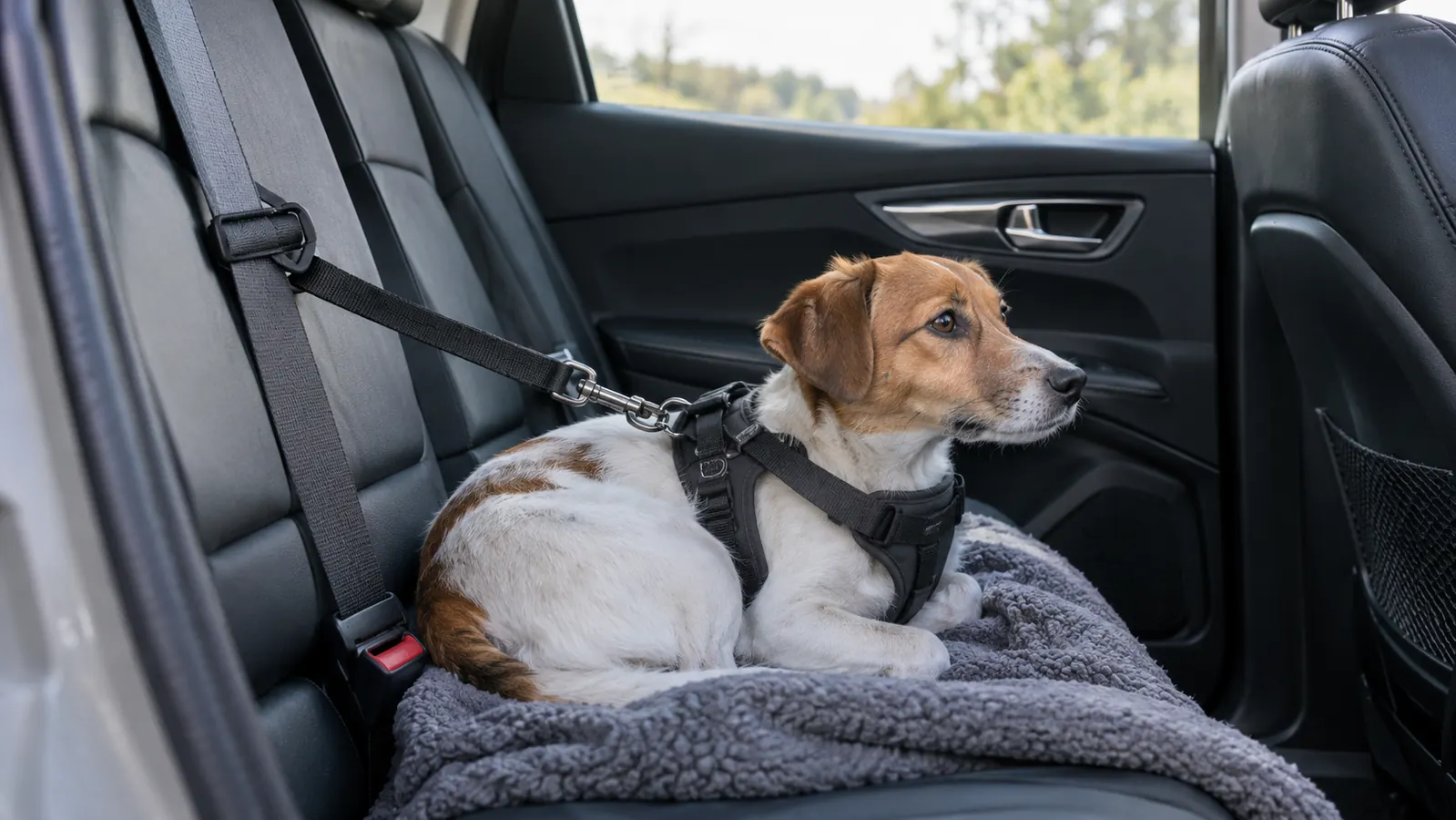
I do not have a crash sled, a test laboratory, or a film crew. What I have is a slower kind of proof: eight months, roughly forty-five car rides with Poppy, and five of those longer than three hours. Most weeks that means a loop around Round Rock for groceries, a run to the vet in Austin, and the groomer, which Biscuit treats as a betrayal. In May we drove to the Gulf coast for a long weekend. In September we took three days to reach my brother's place in Colorado and three more to come home. On every highway mile Poppy wore the Tru-Fit, and wore it the right way: harness snug, seatbelt buckled normally, tether threaded through its loop and clipped to the ring on her back. That consistency is the whole basis of this review.
Before the good parts, you deserve the part where I failed. The first harness I ordered was the XS, because the weight range on the listing started below Poppy's eight pounds and I let that convince me the size was obvious. It buckled, but the shoulder straps pulled at a strange angle and the padded chest plate rode up toward her throat every time she moved. We never left the driveway in it. I exchanged it for the Small, measured Poppy with a cloth tape first this time, and spent that evening adjusting every strap until the fit looked boring. That is the honest summary of Kurgo sizing: the weight range is only a starting point, and the chest measurement is the truth. The Small fits Poppy on its tightest settings, and it only fits that way because I stopped guessing.
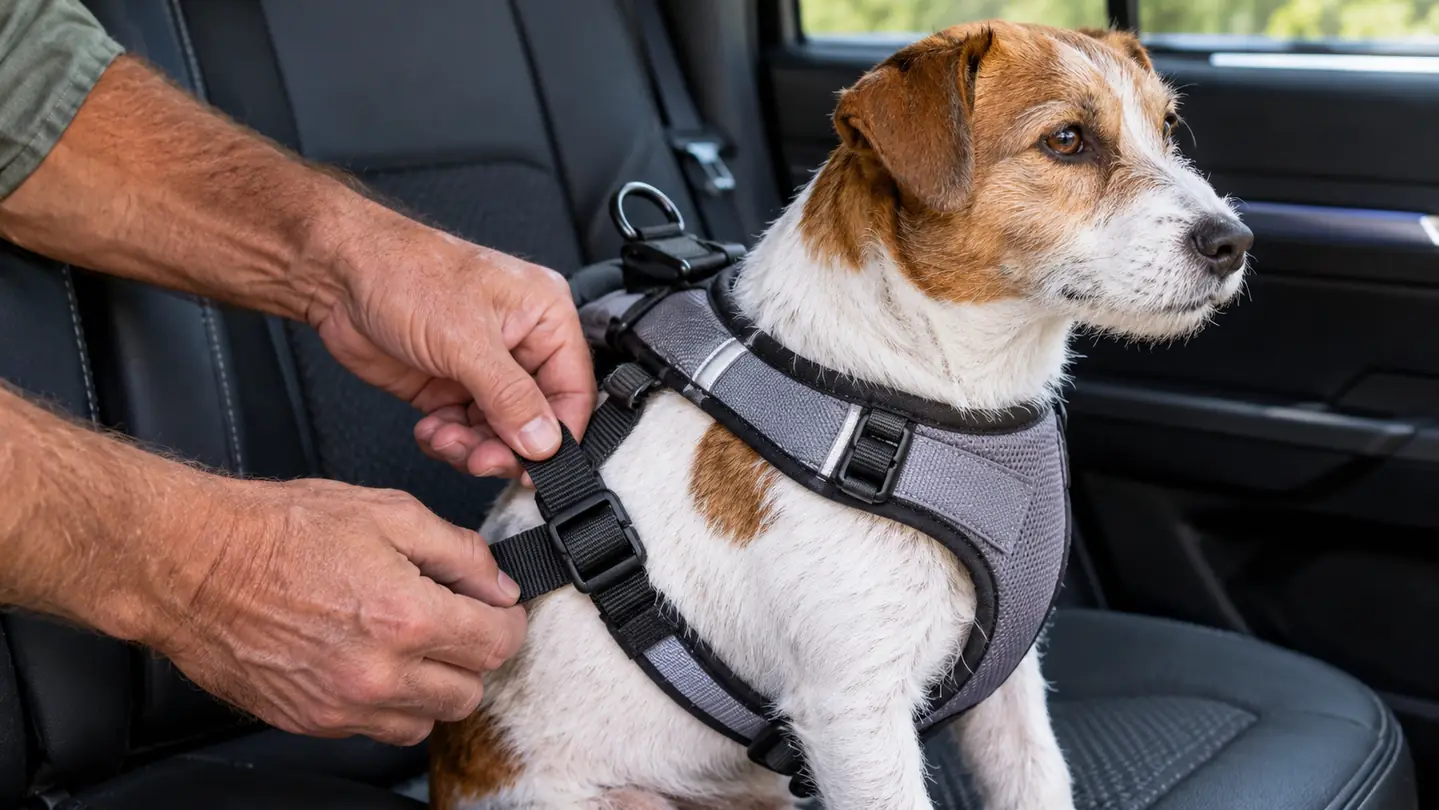
Then came the setup drill, which the product page does not walk you through. The steel ring on the harness has to sit between Poppy's shoulder blades, not behind her neck and not sliding over her ribs. The chest strap crosses the widest part of her rib cage. The belly strap has to be snug enough that I can barely slide one fingertip underneath it, because a loose belly strap is how a small dog backs out. I test the fit the way Poppy tests it: I take the top of the harness between two fingers and pull straight up. If it shifts more than an inch, it is not tight yet. On the first afternoon I adjusted and reset and adjusted again until she stopped fidgeting. That patience is the quiet price of any crash-rated harness, and nobody puts it on the box.
What Nobody Tells You About the Fit
First: the fit does not stay the way you set it. On our first real drive, ten minutes from home, I looked in the rearview mirror and watched the chest pad go crooked across Poppy's breastbone. I pulled off at a gas station in Georgetown, lifted her out, loosened the belly strap, reset the pad, and cinched everything down again. By the time we reached the vet it had drifted once more. The webbing stretches, the pad finds its own angle, and a small dog squirms. Give yourself a settle-in period of the first few weeks and check the fit at every stop during it, the way you would check a tire before a long trip.
Second, and this surprised me more than anything else: the buckle is a two-hand operation, and that is exactly what makes it safe. It will not pop open when Poppy lunges after a squirrel on a walk, and it will not pop open when she braces herself against the tether at a rest area. An older harness in our house had a plastic buckle that gave way during one hard lunge, and I still remember the sound it made. The steel buckle on the Tru-Fit has never once opened on its own in eight months. The tradeoff is honest: releasing it takes two hands and more finger strength than you expect, and on a chilly morning with a wriggling dog it can take two tries. That is a fair price for a buckle that will not open in a crash, but it is real.
The third honest note is about the padding, because I live in Round Rock and August is not a rumor here. The chest plate is thick, and it holds heat against Poppy's fur. In the car with the air conditioning on it is a non-issue; we drove to the Gulf in July heat without a single complaint from her. On foot it is different. If I put the Tru-Fit on for a long summer walk, Poppy starts panting sooner than she does in the lightweight mesh harness she wears around the neighborhood. Washing has a quirk of its own: the pad dries slowly, so I scrub it in the morning and give it until the next day to finish. None of this changes how I feel about the harness in the car, but it changes how I use it.
The Tru-Fit keeps Poppy in place because I measured her chest with a cloth tape before I ordered the right size. Every crash-tested harness starts with that ten minutes of homework, and almost none of the reviews say so.
The One Thing I'd Change
If you ask me for the one thing I would change, it is the belly strap. It works itself loose over a long day, and on a harness whose whole job is to stay put that is not a comfort gripe; it is a safety detail. The chest pad stays where I set it. The shoulder straps stay where I set them. But the strap that runs under Poppy's belly, the one that does the real work of keeping her inside the harness in a hard stop, creeps looser hour by hour. By the end of the first driving day on the way to Colorado I could slide two fingers under a belly strap that had been snug at dawn, and I had already tightened it once at lunch.
My fix is routine, not engineering. Before every ride I re-tighten that strap, and at every stop I check it again in the same pass as Poppy's water and Biscuit's stretch. On the drive home from Colorado I reset it four times across two days. Each reset takes about ten seconds and no tools, and once you know to do it, it stops feeling like a flaw. But you should not learn this from a stranger on the internet after a long drive; you should know it before the first one. Put tighten the belly strap on the same mental list as keys, wallet, and dog water.
Would I buy it again? Yes, with the routine in mind. Would I like a locking cam or a second keeper on that one strap? Yes, and I would happily pay more for it. Every other detail of the Tru-Fit feels engineered and deliberate, which is exactly why the creeping belly strap stands out.
What the Crash Rating Does and Does Not Mean
Most reviews quote Kurgo's crash test claim and stop, as if the harness does the work alone. The part the marketing does not print: the test counts only when the harness is the right size, fitted snugly, and attached to the car the way the instructions show. For the Tru-Fit that means the seatbelt buckles normally, the tether loop slides over the seatbelt webbing, and the clip at the tether's other end snaps onto the ring on the dog's back. Get any of it wrong and you have a comfortable walking harness, not a car restraint.
The second quiet part is fit, and it deserves the repetition. In a sudden stop, a dog wearing a loose harness keeps moving until the webbing catches, and those extra inches of travel are exactly what a restraint is supposed to remove. The chest pad has to lie flat across the breastbone, not ride up on the neck. The ring has to stay between the shoulder blades, not slide around the ribs. The seatbelt cannot be twisted where it passes through the tether. I check all of it before I start the engine, because a harness is only as good as the ten seconds of attention you give it at the beginning of the ride.
The third note is about expectations, and it is the one I wish more owners would hear. For an eight-pound dog, no harness on the market is a promise of walking away from a head-on collision at seventy miles an hour; physics does not bend for a product, and anyone who implies otherwise is selling a story. What a good crash-tested harness does, realistically, is keep a small dog from sailing off the seat in a hard brake, keep her out of the footwell, and keep the driver's eyes on the road because the dog is not sliding around. The Tru-Fit does that job. That is the standard I hold it to, and it has met it for eight months.
What It Is Like on Ordinary Days
Highway miles are only half the story, because most of our drives end in a parking lot. The same steel ring that holds the tether also holds a leash, so the changeover is one motion: unclip tether, clip leash, lift Poppy out of the back seat and set her down. When she is on the ground, the harness is still exactly where it was when the engine started. That sounds minor until you have wrestled a harness that rode up around a dog's neck before you reached the destination.
On the Colorado trip the routine became automatic. At each rest area the drill was identical: park, open the door, unclip the tether, clip the leash, take Poppy to the grass, then reverse the whole sequence when she was back in her seat. By the second day I could do it without looking, and Poppy had stopped flinching at the buckle click. A harness that demands a fight at every stop will not get used, and an unused harness protects nobody. The Tru-Fit gets used because every step is simple.
Eight months in, the durability shows in the details. I run my fingers along the webbing at the adjustment points and find no fraying. The steel buckle still clicks exactly as it did on day one. The stitching around the ring has not pulled. A car harness endures Texas sun, repeated washing, and the trust of a living creature; this one has earned that trust so far.
What I Liked
- The steel buckle has never opened on its own in eight months, even under a full pull.
- Poppy has not slipped out of it once, and she has slipped out of everything else she has worn.
- The tether is included, so there is no separate crash kit to buy and lose.
- With the Small cinched to its tightest settings, it fits a dog right at the bottom of the size range.
- Machine washable, and the padding keeps its shape after washing.
Where It Falls Short
- The belly strap works loose over a long drive; you will re-tighten it at every stop.
- Sizing by the weight range led me wrong; measure the chest with a cloth tape.
- The chest padding holds heat in summer and dries slowly after washing.
- The buckle needs two hands and real finger strength to release.
Who This Is For
This harness is for drivers who take a small dog on the road more than once a week and want that dog in the back seat, wearing something with engineering behind it. It is for owners of escape artists, because the Tru-Fit wraps around both the chest and the belly, and that second strap is what stops the backward shuffle that defeats an over-the-head harness. It is for anyone willing to spend one evening on fit and ten seconds at each rest stop. It is also for people who want to hear the limits, not just the marketing, which is why this review is longer on measurements than on adjectives.
Who Should Skip It
Skip it if your dog already rides in a crash-tested carrier or a travel crate; that is a safe setup and you do not need a second one. Skip it if you want a harness you can throw on without measuring, because the Tru-Fit punishes guesses. If your dog sits between sizes, expect an exchange and order the larger size only after you have the chest measurement in hand. Skip it if you need a summer walking harness, because a padded car harness is the wrong tool for a July hike. And if you know you will not re-tighten a strap at every stop, be honest about that before you buy, because a loose crash harness is just a fancy collar with a rating.
The Tru-Fit Is Poppy's Seatbelt Now
Eight months, one returned size, one evening of fitting, and a belly strap I tighten at every stop. That is the honest trade for a harness that holds an eight-pound escape artist in place. Check the current price on Amazon and bring a cloth tape measure with you when you look at the size chart.
Amazon Check Today's Price on Amazon →