When I first started driving anywhere with Biscuit, my nine year old Yorkshire Terrier, the shaking started before I turned the key. He weighed about 6 pounds and could fit in a shopping bag, and the instant he heard my keys he would start panting, drooling, and trembling in a tight little ball. I made every mistake you can make with a nervous small dog in a car. I let him ride loose. I let him ride up front. I tried to soothe him in a baby voice while I merged onto I-35, which only taught him that merging was worth panicking about. None of it worked, because none of it addressed what was actually scaring him.
The fix was not one thing. It was a routine, and it took me the better part of a year to put it together. What finally worked was a predictable pre-trip ritual, a back seat setup that gives a small dog somewhere to feel secure, a dose of PREMIUM CARE calming chews given early enough to actually work, and drives that start short and stretch longer on purpose. This article walks through the order I use now with Biscuit and with Poppy, my bold 8 pound Yorkie who would rather climb the headrest than admit she is nervous. If your dog is the one panting before you reach the end of the driveway, start with Step 1 and go in order.
The one chew I would not road trip without
The routine has five steps, but the piece I refuse to skip is a PREMIUM CARE calming chew given 40 minutes before the door opens. It is not a sedative. It takes the edge off so the rest of the routine has a chance to work. See today's price on Amazon.
Amazon Check Today's Price on Amazon →Step 1: Change what happens before the car door opens
For Biscuit, the car was not the problem. The problem was that the car meant I was about to leave him, or take him somewhere strange, and he had no way to know which until we were already moving. So the first thing I changed was the twenty minutes before the trip. He now gets a short walk to burn off the edge, then a bathroom break, then a calm five minutes indoors with no keys in sight. I keep my voice low and my movements slow, the same way I do when I am pulling a cake out of the oven. No chasing, no coaxing him in a singsong voice. The goal is to make leaving look boring.
I also stopped letting my keys become a signal. For about two weeks I carried them around the house at random times, jangled them at my desk, and went nowhere. When the jingle stopped meaning we are leaving right now, the trembling that started at the key ring stopped too. If your dog starts panting the moment you pick up a purse or put on shoes, do the same drill with whatever object sets him off. It sounds slow, but it takes less time than un-training a dog who already panics in the car.
One more thing that helped: I stopped announcing road trips with a suitcase. For a while I packed the night before and loaded the car while the dogs were outside, so they never learned to connect the suitcase with being left behind. Now packing the car is ordinary, and the dogs stay relaxed while I do it.
Step 2: Give the back seat a setup that makes sense to a small dog
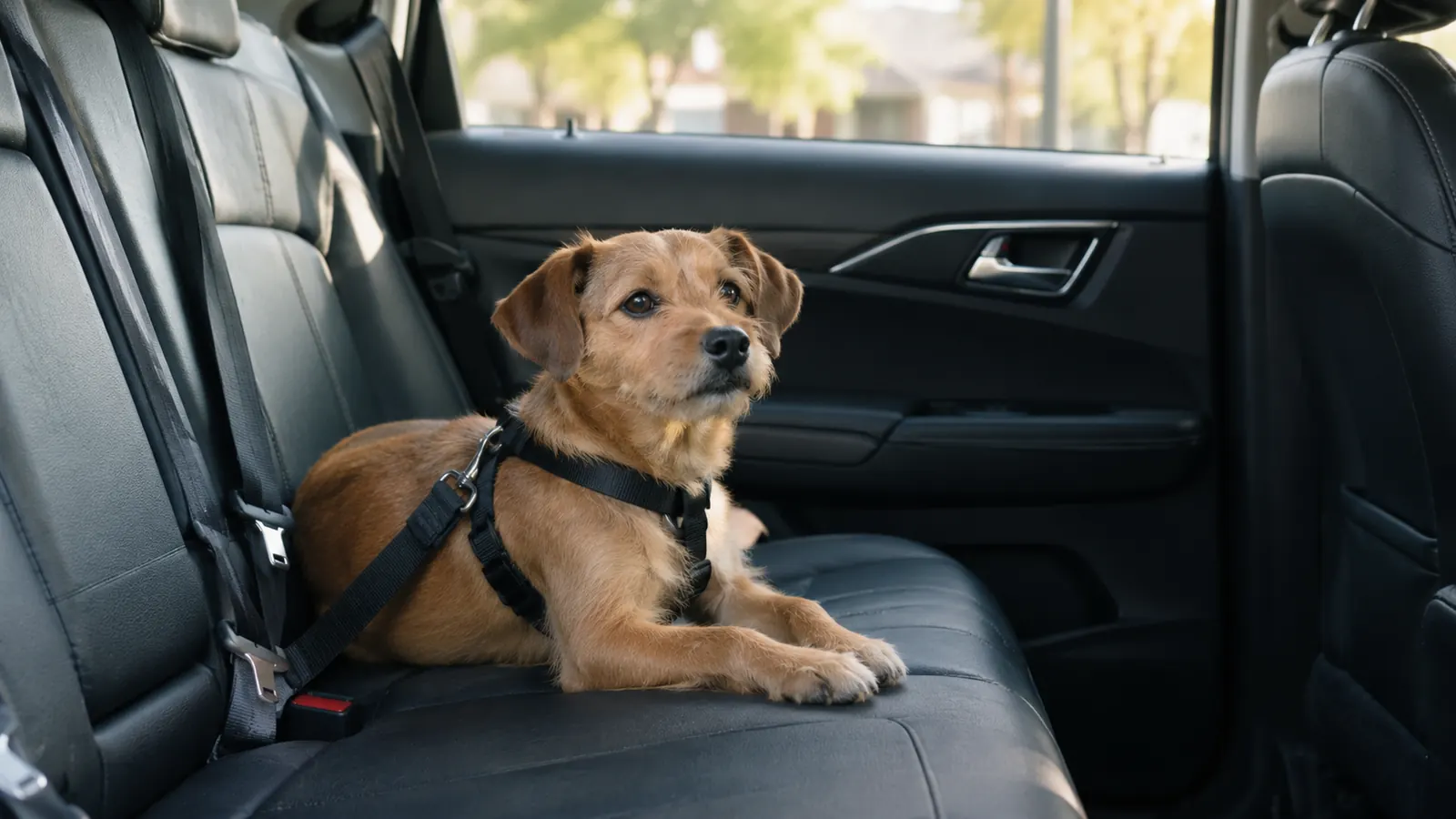
Both of my dogs ride in the back seat of my 2019 Honda CR-V, never in the front and never loose. Loose is how a 6 pound dog ends up under the brake pedal, and it is also how a nervous dog makes the whole ride worse, because nothing feels secure when you can slide across the seat at every turn. Biscuit needs two things to settle: a harness that clips to the seat belt and a clear line of sight to me. When he can see my face, he stops scanning for danger. Poppy, who can slip a collar in about four seconds, gets the same harness, clipped to the same tether, with the fit checked twice. A snug harness that lets a dog sit, stand, and lie down is the difference between a calm passenger and a panicked one.
For a dog that settles better in a cave than in the open, try a carrier on the back seat instead of an open seat, and leave one side of the zipper open so he can still see you. A small dog who cannot see his person will often cry the whole trip. Add a folded blanket that already smells like home, and crack the window an inch or two so the air does not go stale. Biscuit stopped drooling the day I realized he was less anxious than carsick, and carsick partly because the back seat felt like a stuffy, sightless box.
If your dog still cries in a carrier, go back to an open seat with a tether for a couple of weeks before you try the carrier again. A nervous small dog needs to learn that the car itself is safe before it can learn to like a box inside the car. We took it in stages, and it was the stages that did the work, not any single piece of gear.
Step 3: Give the calming chew forty minutes, not five
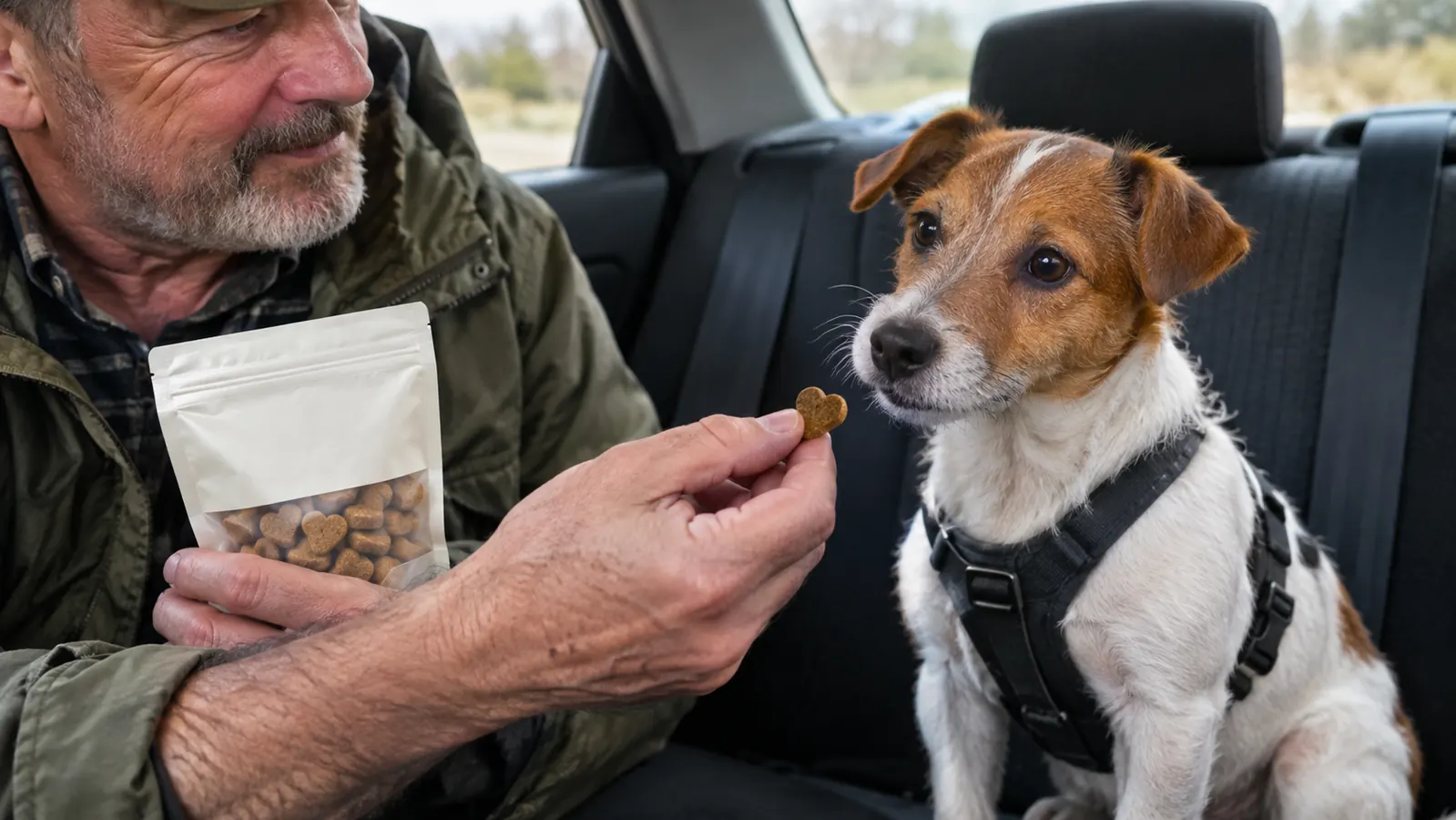
The single biggest mistake I made was waiting until we were in the car to offer a calming treat. By then Biscuit's heart was already pounding and no chew on earth was going to catch up. Now I give him a PREMIUM CARE calming chew about forty minutes before we leave, while we are still at home in the quiet part of the routine. He gets the labeled amount for his weight, tucked into a dab of peanut butter if he is being picky. By the time we reach the car, the chew has had time to do its work, and he walks to the driveway instead of shaking at the door.
Do not expect a sleepy dog. These chews do not knock a dog out, and you do not want one that does. What I see with Biscuit is a dog who still knows we are going somewhere but no longer treats it as an emergency. His ears stay soft, his mouth is dry, and he watches the road with real interest instead of staring at nothing. For Poppy, who is more excited than scared, I give the same chew only on long trips, because on a ten minute run to the grocery store she does not need it.
Follow the serving size on the package, and always test the chew at home before you rely on it in the car. Some dogs need more lead time than others, so try it once on a day when you have nowhere urgent to be.
Step 4: Rewrite the first five minutes of every drive
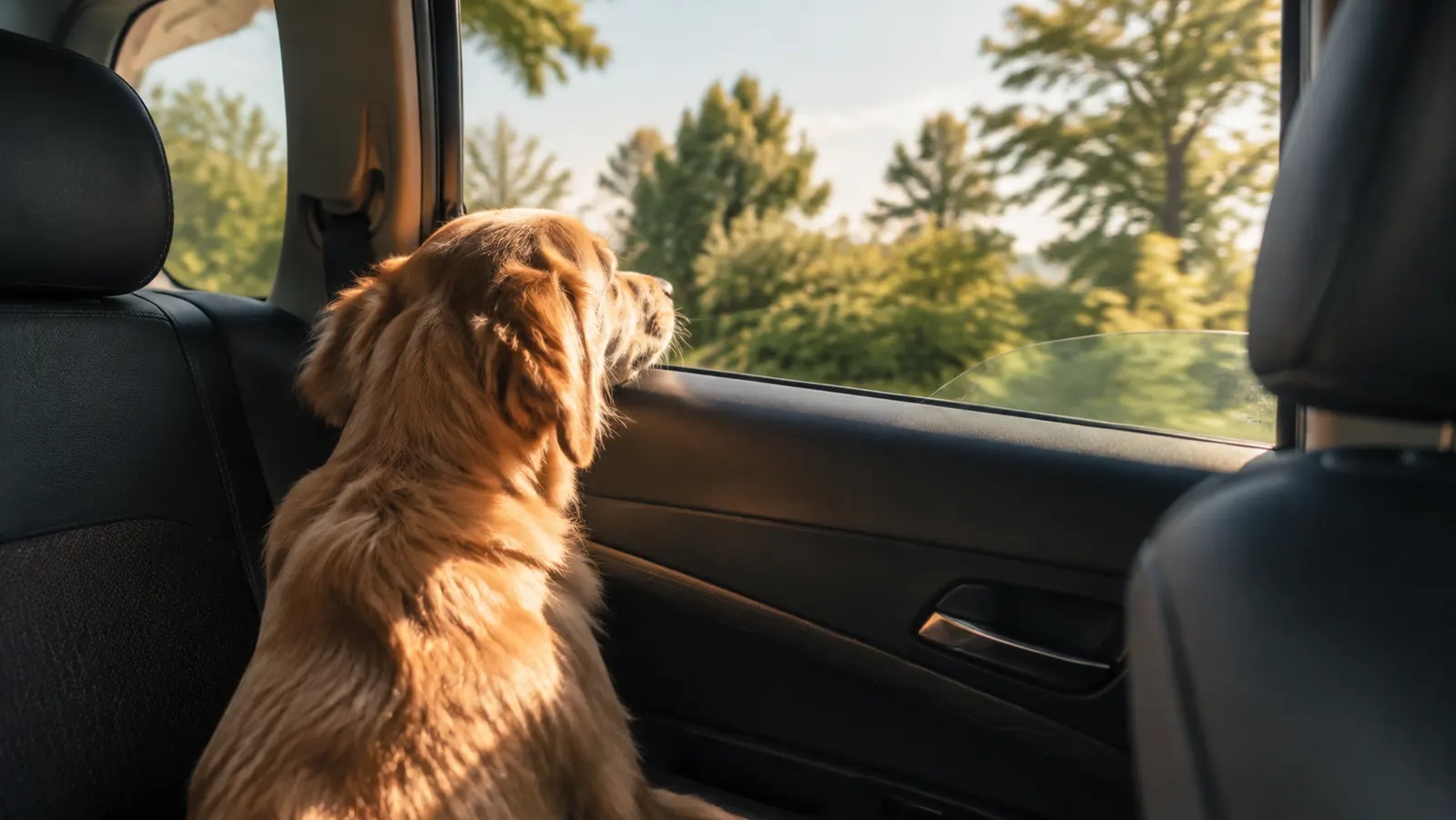
The first five minutes set the tone for the whole trip, so I make them as boring as possible. Radio off. Windows up until we are on the main road. My voice flat and calm. I back out slowly and do not speak to Biscuit until we are a couple of blocks from home, and when he is quiet I say the word settle and give him a tiny piece of plain chicken. The treat is not a reward for the shaking. It is a marker for the exact moment he relaxes, and dogs learn that marker fast.
For the first two weeks of the new routine, the whole drive was a loop around our block. Five minutes out, five minutes back, then home, out of the car, and a small celebration. I did that twice a day until Biscuit stepped into the car on his own. Then I stretched the loop to the park, then to the drive-through where a coffee shop keeps a jar of dog biscuits, and only then to the places that actually mattered. If your dog panics on the first attempt, cut the distance in half, not the routine.
How the drive ends matters as much as how it starts. I pull into the driveway and sit for a minute with the engine off before I open the door, so the arrival is as calm as the departure. Biscuit stays in his seat until I unclip him, which sounds like a small thing and is actually the whole point.
Step 5: Stretch the drives on purpose, in both directions
Calm in the car is a skill, and skills need practice, so I schedule practice drives the way I schedule a second rise for bread dough, with patience and a timer. Once a week Biscuit gets a drive that is slightly longer than the last one. We have worked up from the block to a full hour, and last summer we did the long run from Round Rock to Colorado in three chunks with a rest stop in the middle. He slept through most of the second chunk, which five years ago I would not have believed possible.
Destination matters as much as distance. If every car ride ends at the groomer or the vet, your dog is learning that the car predicts bad things. So some practice drives end at a walking trail, and some end in a quiet parking lot where they get a chew and a nap. Some end nowhere in particular, just a turn around and a calm ride home to a treat in the kitchen. You do not bake a pound cake by cranking the oven to full heat and hoping; you bring the temperature up gently, and a nervous dog works the same way.
What Else Helps an Anxious Dog in the Car
Motion sickness looks exactly like anxiety, and I wasted months treating the wrong one. If your dog drools heavily, yawns constantly, or vomits on short drives, talk to your vet before you buy anything. Car sickness is a physical problem, and it can make a dog dread the car even after the nausea is gone. Our vet pointed out that Biscuit's drooling started within a block of home, which is too fast for ordinary carsickness.
A few cheap additions made the routine stick. A non-slip seat cover stops a small dog from sliding, and sliding is scary when you weigh 6 pounds. A seat belt tether that clips to a harness, never to a collar, keeps Biscuit safe without letting him roam to the window. I also keep the car cooler than I would for myself, because a panting dog overheats fast, and I skip the big breakfast before travel. A half empty stomach travels better.
Finally, do not punish the fear. Biscuit's trembling was not disobedience, and scolding him only proved that the car was a place where scary things happened. When he shakes now, I do not make a fuss one way or the other. I drive the planned route, I mark the quiet moments, and I let the chew and the routine do their work. The change did not happen overnight, but it happened.
One last note on long road trips: plan the schedule around the dog, not the other way around. We stop every two hours for water and a walk, which is more often than I would stop on my own. A small dog with a full bladder is an anxious dog, and an anxious dog undoes every good habit you have built.
The moment it all clicked was not a big drive to Colorado. It was a Tuesday trip to the vet when Biscuit walked to the car instead of hiding under the bed.
Give it two full weeks before you decide it did not work
The chew is easy to buy; the routine is the part you have to keep. I keep a spare pack of PREMIUM CARE calming chews in the door pocket of the CR-V so the drive home is covered. Start with Step 1 tonight and see where you are after fourteen days.
Amazon Check Today's Price on Amazon →