My two Yorkshire Terriers have very different travel personalities. Biscuit, nine years old and six pounds, braces himself the second the CR-V door opens. Poppy, five years old and eight pounds, tries to climb over the center console before her harness is clipped. They both travel better when I give them a calming chew ahead of time. The one I have settled on is PREMIUM CARE Calming Chews, and it goes into the travel kit the same way the collapsible bowls do.
For years I did the thing many small dog owners do. I tried to reason with Biscuit. That does not work. I tried a longer walk before we left. That does not work either. A nervous system does not negotiate. The chew works because it lowers the arousal level before the car even moves. It is not a sedative and it does not turn him into a zombie. It just removes the sharp edge that made every mile stressful.
Start the trip calm, not braced for it.
PREMIUM CARE Calming Chews are the part of the routine that controls what you can control. Give both dogs their chews about 40 minutes before the wheels start turning and you skip the trembling, the whining and the white-knuckle grip on the carrier mesh.
Amazon Check Today's Price on Amazon →It lets a little dog nap through the first hour instead of trembling through it
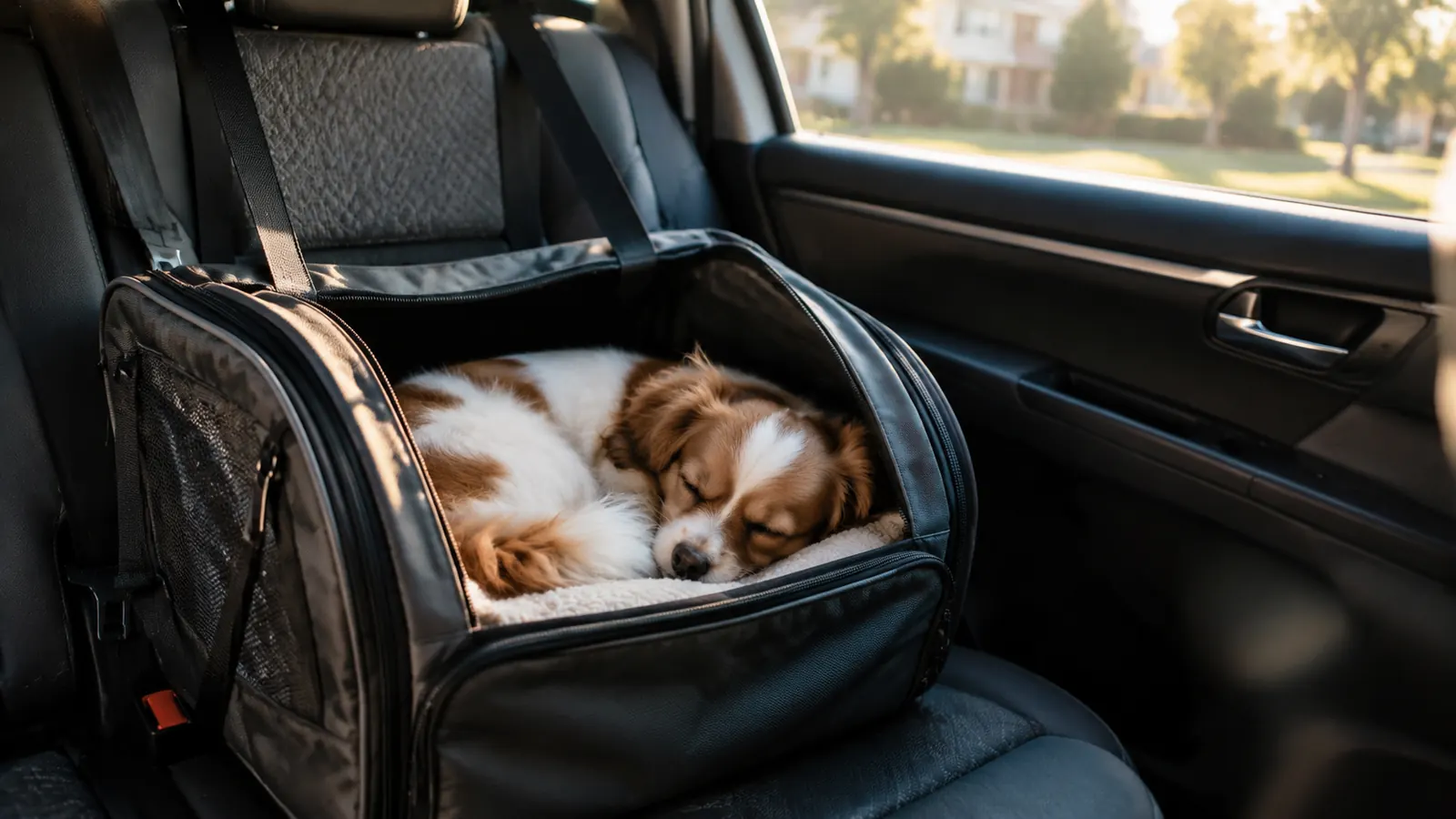
Biscuit is small enough that every bump in the road hits him harder than it would hit a dog three times his size. When he is nervous, he stiffens and stares at the door, and by Georgetown he is already spent. On chew days, he curls into the back corner of his carrier and falls asleep before the Round Rock city limit. He gets to the hotel with energy for a walk instead of needing three hours to recover.
The carrier starts to feel like a den, not a danger zone
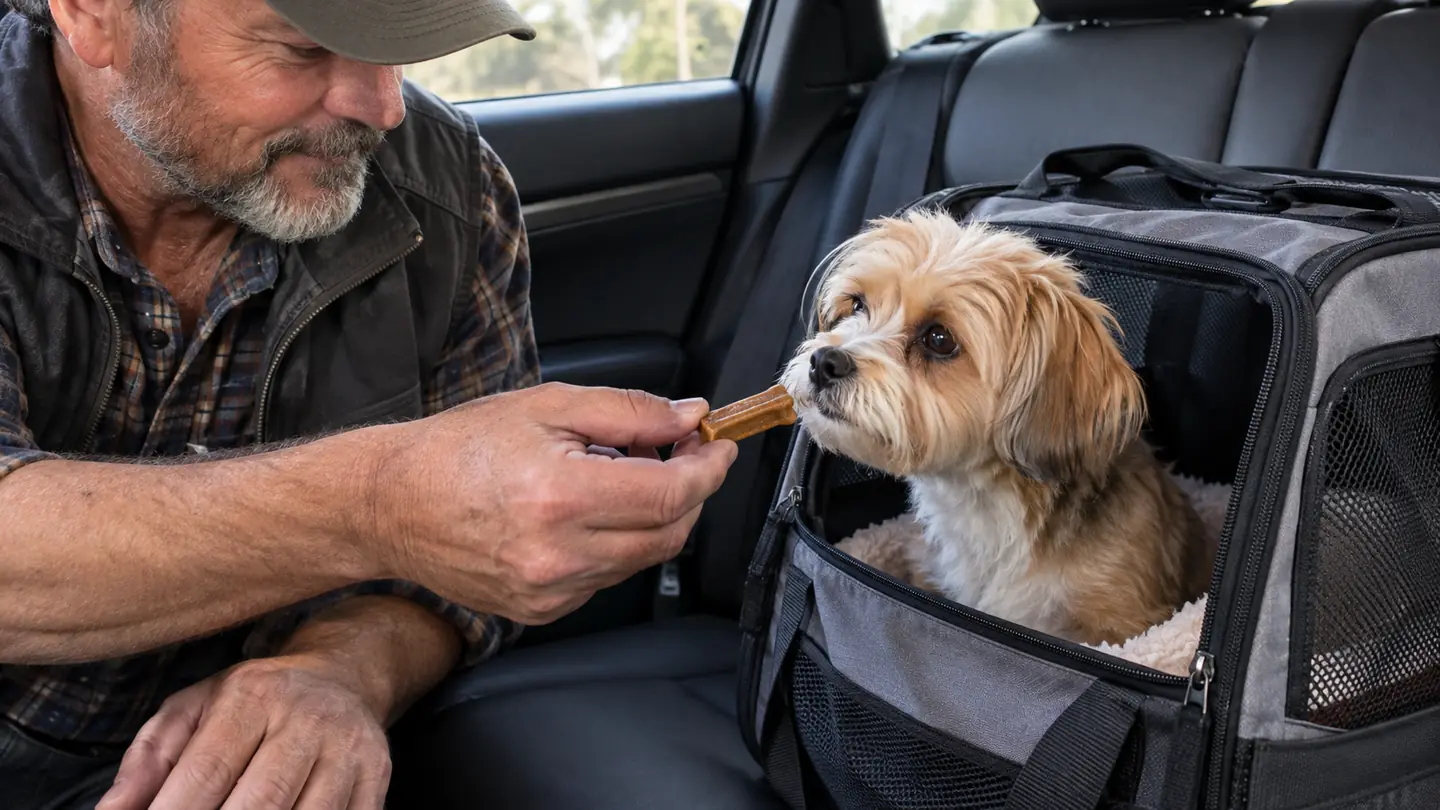
Biscuit used to get inside his soft-sided carrier only when he knew something bad was coming. After a few calm trips, the memory of the carrier changed. Now he walks in on his own and lies down before I zip it shut. That makes airport security, hotel lobbies and the back seat of my CR-V all easier to manage, because the carrier is the safe place instead of the cue for panic.
It heads off the nausea that follows anxiety
A tense stomach is a rolling stomach, and a six pound stomach rolls fast. When Biscuit pants and swallows air, he is one curve away from drooling and then throwing up. PREMIUM CARE does not stop motion sickness on switchbacks, but it does stop the anxious panting that turns ordinary highway miles into a roller coaster. Most of my Texas to Colorado drives are drool free now.
It gives a busy little mouth a job to do
Poppy is the escape artist. She climbs seatbacks, digs at the carrier window and tries to supervise every car that passes us. The rhythmic chewing seems to satisfy that need to be doing something with her mouth. Ten minutes after the chew, she stops supervising and starts watching the world go by, which is a much safer way for an eight pound dog to ride.
Rest stops stop turning into pee emergencies
An anxious small dog will refuse to go at a rest stop and then dampen the carrier ten miles down the road. I have cleaned up after that exact mistake more than once. When Biscuit is calm, he sniffs the grass and actually goes, so we do not spend the next hour looking for the next exit. Fewer towels for me and less stress for him.
The high-pitched whine stays in the car, not in your head
Biscuit does not bark on trips. He whines, a steady small dog sound that starts at the Round Rock city limits and does not stop until we park. The chew lowers his arousal enough that he can hear a semi truck, decide it is not a threat, and let it go. The quiet in the cabin is noticeable, and it makes the whole drive easier for both of us.
It turns the under-seat part of a flight into a nap instead of a whimper
Biscuit flies in the cabin with me, zipped into a carrier that has to fit under the seat. The worst part for him is that once he is under there, he cannot see me. A chew before the shuttle makes the difference between 90 minutes of muffled squeaking and a dog who naps through the taxi to the runway. That is worth the extra spot in my carry on.
A calm arrival makes the first hotel night easier
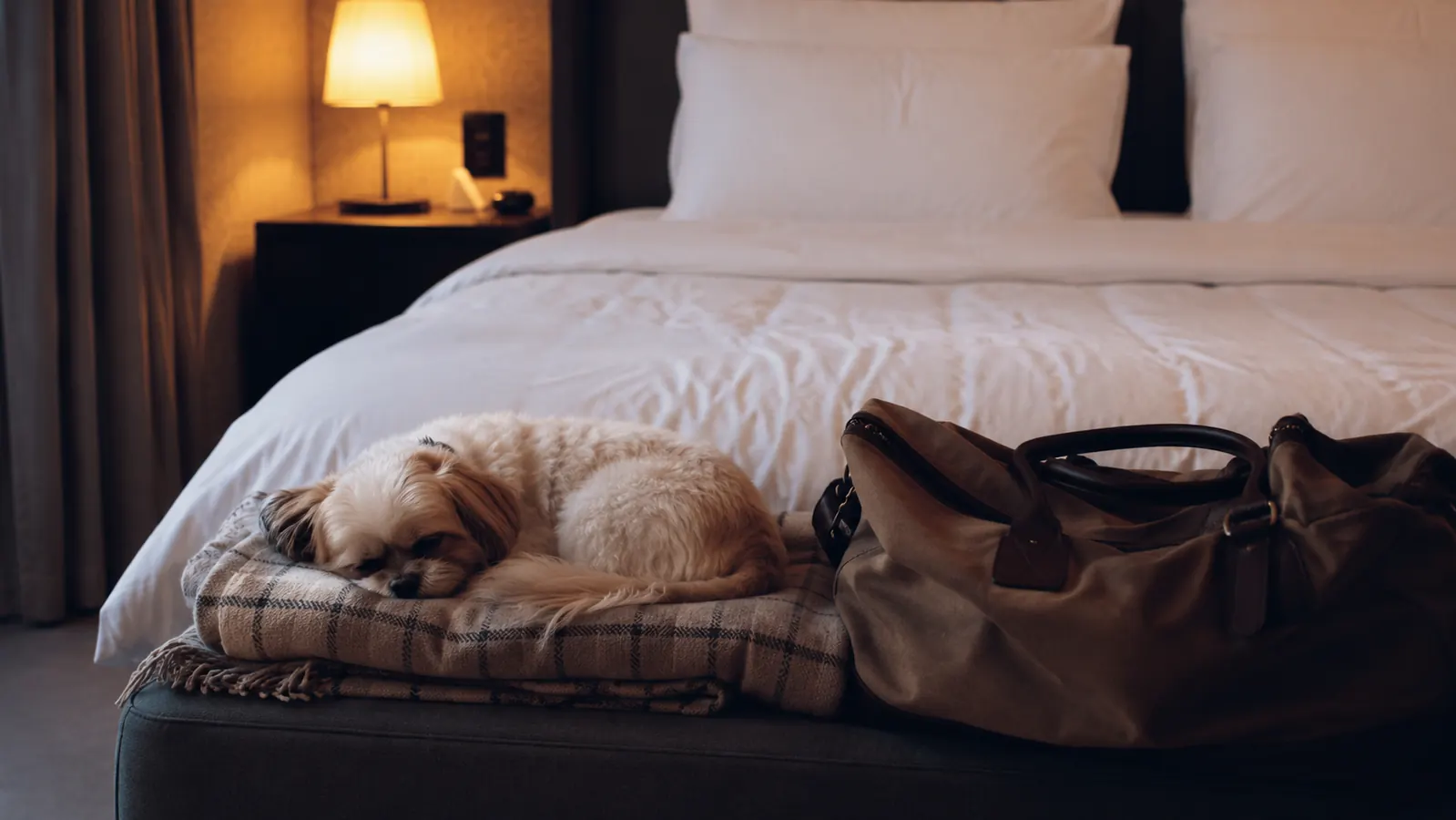
The first night in a new room is when small dogs cry, pace or forget their house training. If they arrive already frazzled, that first night is much worse. With the chew, they have a quiet last hour in the car, so by check-in they are curious instead of keyed up. They eat dinner, find the dog bed and sleep through until morning.
It keeps a picky eater from skipping the meal before a drive
Poppy has a sensitive stomach and she gets picky when she is wound up. If she skips dinner the night before a trip, she is shaky by lunch the next day. A calming chew takes the edge off, she eats her normal meal, and we do not start a long day with a fasting eight pound dog. Food is fuel for a small dog.
The ride home makes the car feel safe, not scary
The ride home is the one that teaches a dog whether the car is something to dread. If every trip ends in stress, Biscuit will learn to brace himself the moment I reach for the keys. The chew on the last morning gives him the same calm ride home he had on the way out, and we pull into Round Rock tired but relaxed. The next time the car door opens, he comes willingly.
How I time it on a long drive
Both dogs ride in the back seat of my CR-V, never loose and never up front. About 45 minutes before I load them, I give each dog a PREMIUM CARE chew. I use the waiting time to buckle the carrier into the back seat and make sure the vents are aimed at the mesh. On a 14-hour drive to Colorado, we still stop every three hours for water and a short walk. The chew is not permission to skip the stops; it is what makes the miles between them calm.
Some dogs need the chew an hour ahead and some need only 30 minutes. I learned to test ours at home on a Saturday because the last thing you want is a surprise on the day you leave. Once you know the timing, the routine becomes boring in the best way: chew, carrier, seat belt, highway.
What I'd Skip
What I would skip is the idea that any chew replaces the travel gear that keeps a dog safe. PREMIUM CARE only does its job when your dog is clipped into a properly fitted harness and the carrier is secured for the drive. I would also skip giving the first chew on the day of a big trip. Test it at home first. If your dog takes prescription anxiety medication, ask your vet before combining anything. And skip the giant serving if your dog weighs six pounds; start with the serving size on the label and see how it lands.
On the drive home from Colorado last spring, Biscuit slept through New Mexico and watched the mesas from the carrier window. That is the dog I want on every trip.
Give the whole trip a calmer first hour
PREMIUM CARE Calming Chews have been in my travel bag for two years now. They are why a six pound Yorkie who used to tremble at the sight of the CR-V naps through New Mexico instead. Skip the guesswork and check today's price before your next trip.
Amazon Check Today's Price on Amazon →