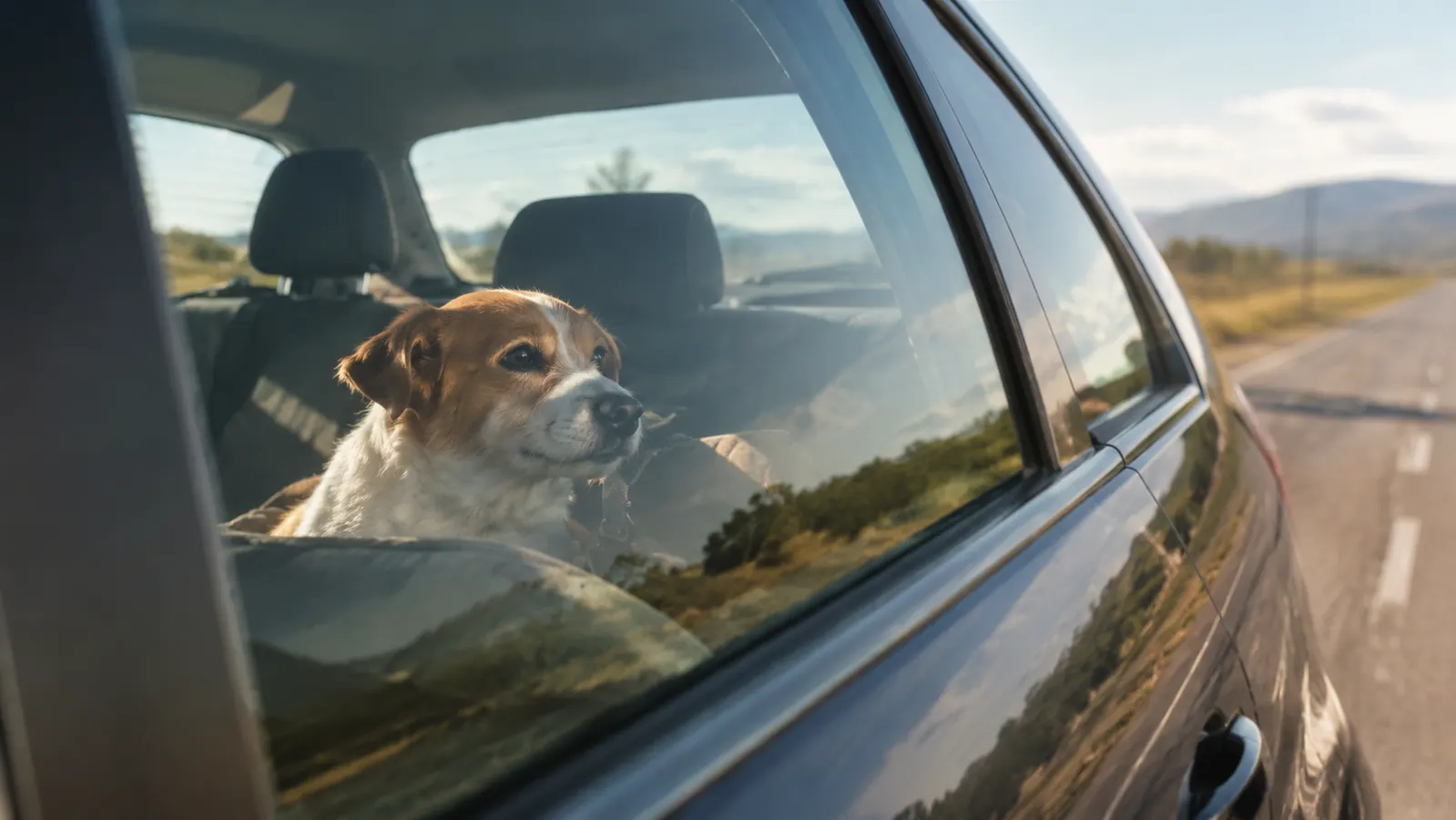
I have a nine-year-old Yorkshire Terrier named Biscuit, and he loses his composure every time I pick up the car keys. Poppy, my five-year-old, hops in like she owns the place, but Biscuit starts panting and drooling before we back out of the driveway in Round Rock, Texas. I have tried two kinds of aids on him: a calming chew from PREMIUM CARE and a compression wrap called the ThunderShirt. Both work, and both fail, depending on the situation. What follows is what I learned from a summer of long drives to the Gulf and into the mountains of Colorado.
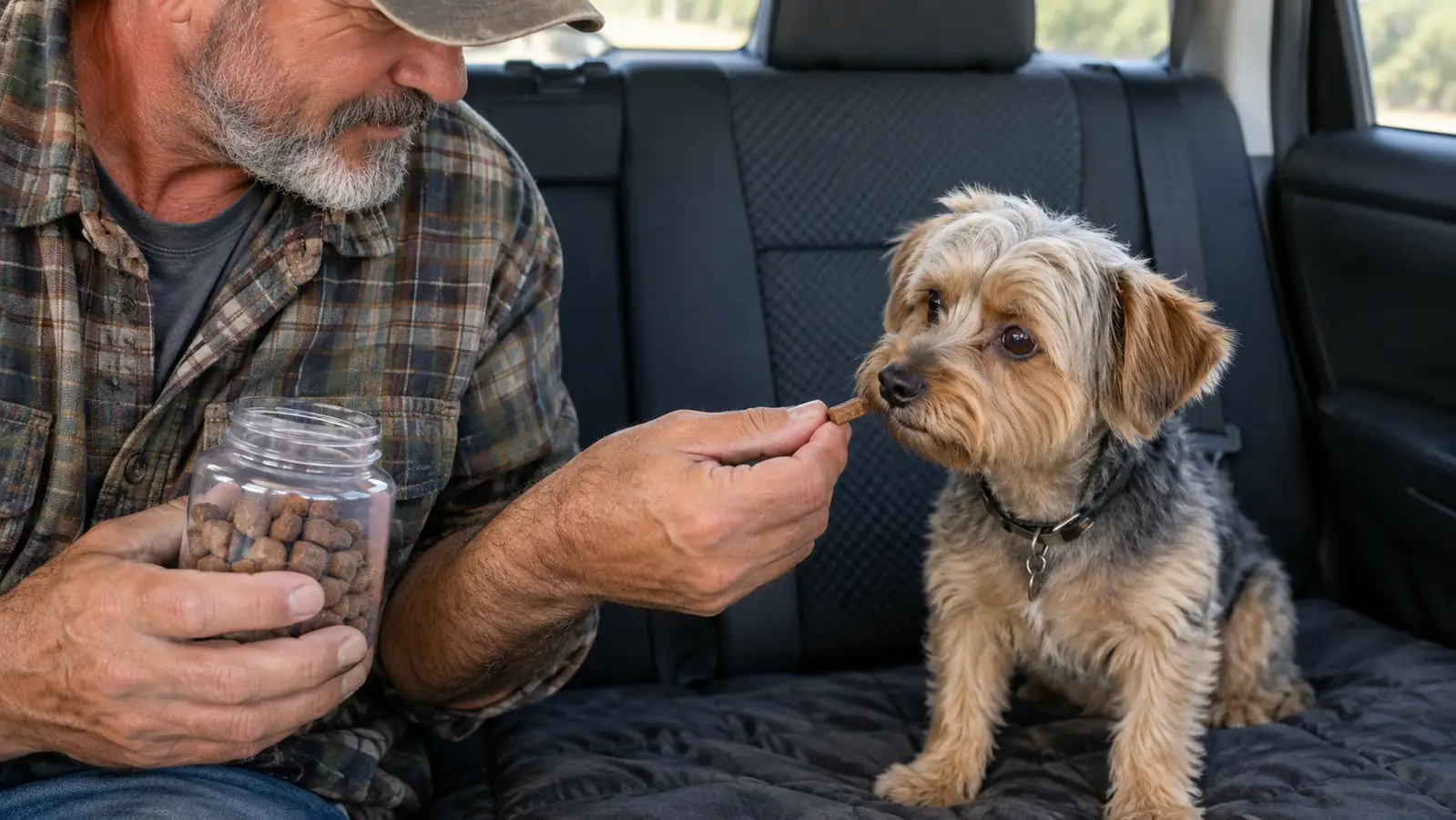
The short version is simple. If I know I am leaving on Saturday morning, I give Biscuit the PREMIUM CARE chew about forty five minutes before we load the car. The chew quiets the queasy stomach and the anxious brain, and he curls up on the back seat. The ThunderShirt is what I grab when a storm or a loud noise catches us on the road with no warning. It can be put on in two minutes and stops shaking within a few more. For my car, that means I travel with both. They are not rivals, they are tools for two different jobs.
How I Tested Both on the Same Dog
For this comparison I used Biscuit on repeated drives between Round Rock and our regular stops near the Gulf and in southern Colorado. I gave the chew at different lead times, from ten minutes to an hour, and I put the ThunderShirt on him during fireworks, construction noise, and storm weather. I kept a small notebook in the car and wrote down three signs: the open mouth pant, the wet drool on the seat cover, and the high pitched whine that tells me he wants to turn around.
What surprised me was the timing gap. The PREMIUM CARE chew needed a full forty five minutes to take effect. When I rushed and gave it ten minutes before leaving, Biscuit stayed tense for the first hour of the drive. When I waited the full lead time, he relaxed before we reached the highway. The ThunderShirt did not need lead time, but it only helped if he was wearing it. On a hot afternoon he would start to squirm under the fabric after about ninety minutes, so I had to stop and take it off. Both methods had a window where they made things worse.
I also logged the distances. The shortest run was a hundred and eighty miles to visit my sister in Waco. The longest was the eleven hundred mile push from Round Rock to a cabin near Durango. The chew worked best on the long, steady, boring stretches. The wrap worked best on the short, punchy drives where I could not plan around Biscuit's mood.
| PREMIUM CARE Calming Chews | ThunderShirt | |
|---|---|---|
| What it does | Mild calming nutrients that work from the inside | Steady pressure on the chest that feels like a hug |
| Time to start working | About 45 minutes after eating | Within a few minutes of being fitted |
| Do you need to plan ahead | Yes, you need 45 to 60 minutes | No, you can use it at a rest stop |
| Does the dog have to wear it | No, he just eats it | Yes, it wraps around his torso |
| Fight to get it on a squirmy dog | None, it is a treat | Some, especially on first use |
| Helps with carsickness | It helped Biscuit's drooling on a long highway | Pressure wrap does not treat nausea |
| Handles sudden thunder or noise | Too slow if you have not planned | Great, because you can apply it instantly |
| Duration for a full day of travel | You may want a second dose after six hours | Stays effective while it stays on |
| Best role | Planned road trips and car sickness | Emergencies and noise phobia |
Where the PREMIUM CARE Calming Chews Win
For a normal, planned departure, the PREMIUM CARE chew wins because it removes the fight before the fight starts. I give Biscuit the chew with his breakfast, load the bags, check the tire pressure, and by the time I call the dogs to the car Biscuit is already yawning. He does not tuck his tail when I open the door. He climbs onto his folded blanket and settles into the small nest he has made out of Poppy's bed. This is the behavior I want on a seven hour drive, not the trembling that used to start the moment I picked up the car keys. The chew does not knock him out, it just takes the edge off enough for him to remember that the car is not a danger.
The other place the chew stood out was in the queasy stretch of the drive. On the way to Gulf Shores, Biscuit used to start drooling about forty minutes in, right around the time the road noise built to a steady roar. With the PREMIUM CARE chew in his system, he slept through that same stretch on I-10 between San Antonio and Houston. He did not drool on the seat cover and he did not whine at every rest area. When we stopped for lunch, he woke up, ate a small bite, and got back in the car without shaking. For a dog who used to pace the back seat for hours, that is the closest thing I have found to peace.
There is also the simple matter of a dog who hates wearing clothes. Biscuit has never liked shirts, coats, or anything that wraps his ribcage. On a summer drive, he would rather be naked. The chew is invisible. It goes down like a treat, and it does not add heat, weight, or a layer of fabric on a ninety degree day. That alone makes it the better choice for long distance travel in a warm climate.
With the PREMIUM CARE chew in his system, Biscuit slept through the stretch of I-10 that used to make him drool and shake.
Where the ThunderShirt Wins
The ThunderShirt earns its place on the day there is no warning. On the way back from Colorado, construction sent us onto a gravel detour next to a rock quarry. Every few seconds a charge went off with a deep boom that shook the car. Poppy watched out the window, but Biscuit started trembling and tried to climb into the front seat. A chew would have taken almost an hour to help. The wrap worked in the time it took me to pull over at a feed store and fasten it around his chest. Three minutes later, his breathing slowed and he stopped looking for an escape.
The wrap is also a backup for a dog that will not take anything by mouth. Poppy will eat anything, but I have known Yorkies who turn up their nose at chews and spit them out under the seat. If your dog is that picky, the ThunderShirt is the only option that works because it does not go through the digestive system. There is no taste, no waiting period, and no chance that the dose ends up in the floor mat. You simply put it on and the pressure does the work.
Finally, the wrap does not lose strength halfway through a trip. A chew has a limited window and you cannot give a second dose too soon. The ThunderShirt keeps working as long as you leave it in place. On a long day I have left it on through lunch and an afternoon storm with no sign that it wore off. It also handles fear that has nothing to do with motion, like thunder or fireworks, which is why it stays in my car even when the chews are in the glovebox.
One more thing: the wrap has become the tool I grab for vet visits, where a chew would not be practical. Biscuit still shakes in the waiting room, and the wrap calms him without making him sleepy. That alone has made the ThunderShirt worth keeping in the car all year.
For planned road trips, the PREMIUM CARE chew is the one I reach for.
See today's price and read the nearly 50,000 owner ratings. If your dog gets anxious before a drive, this chew is worth trying for your next trip.
Amazon Check Today's Price on Amazon →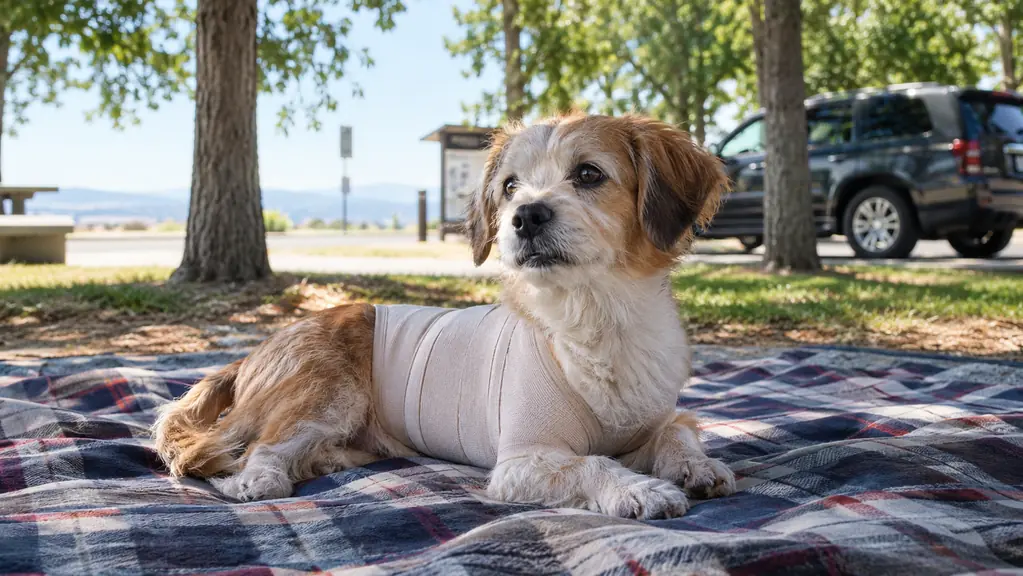
What I Learned on the Road
The first thing I learned is that a chew is not a tranquilizer. It takes the edge off, but it will not stop a panic attack from a noise that happens right next to the car. I tried to use the PREMIUM CARE chew for a thunderstorm that started while Biscuit was in the back seat. Because I had not planned for it, we spent twenty minutes on the shoulder with a shaking dog. That was the day I realized I needed a second tool for the unpredicted moments.
The ThunderShirt taught me the opposite lesson. It calms the body, but not the stomach. On a winding road in the Texas hill country, the wrap did nothing for Biscuit's drooling, and he still threw up on his bed. A compression garment cannot settle nausea. That is the job of something taken by mouth. So I stopped expecting one tool to solve every problem and started matching the tool to the trigger.
What finally made the difference was using both together. On a cloudy morning, I gave the chew before we left and kept the wrap in the car. When we hit a patch of supercell weather south of Wichita Falls, I did not panic. I pulled over, put the wrap on Biscuit, and we made it to the hotel without a massive meltdown. That routine is now how we travel everywhere.
Dogs also vary day to day. Some mornings Biscuit is more anxious than others, and the same dose does not always have the same effect. I learned to keep a journal and to give the chew a little earlier if he had not slept well or if there was construction near the house. There is no magic schedule, only a rhythm you build with your dog.
Who Should Buy Which
Buy the PREMIUM CARE chew if your dog's anxiety is tied to the motion of the car and you usually know when you are leaving. Give it forty five minutes before you go, and your dog can ride the way Biscuit does now, curled up and resting instead of panting. It also suits dogs that hate clothing and owners who do not want to wrestle a small, frightened animal into a wrap before sunrise.
Buy the ThunderShirt if your dog panics at loud noises, fireworks, or things that happen without notice. It is also better if you have a picky eater or if you need the aid to work in minutes rather than an hour. A wrap will not cure car sickness, but it is a remarkable rescue tool when the trigger is a sudden boom rather than the motion of the road.
The reason I own both is that travel with a small dog is rarely one single problem. There is the sustained anxiety of a long drive, which the chew handles, and there is the spike of fear from a bang or a jolt, which the wrap handles. My actual routine on a trip is to give Biscuit a PREMIUM CARE chew before we leave and to keep the ThunderShirt folded in the side pocket of the door in case something unexpected happens on the road.
If you really want me to pick one, the chew is the better first purchase because most car anxiety involves motion and anticipation, and those are exactly what a chew addresses. But if your dog's fear is thunder or a specific noise, do not expect a pill to outrun a thunderclap. Start with the one that matches the trigger you see most often.
The Final Verdict
If I could only keep one, I would keep the PREMIUM CARE chew, because it makes the idea of a road trip possible for a small anxious dog. It lets Biscuit curl up on the back seat, and it keeps my own stress down, knowing he is not going to drool for seven hours. But I would not want to face an evening thunderstorm on I-40 without the ThunderShirt waiting in the door pocket.
The honest bottom line is that the two tools solve different problems. If your dog is anxious mostly from motion and the expectation of a car ride, the chew is the better first buy. If the anxiety comes on suddenly, from noise or weather, the wrap is the one that saves the trip. You can try the chew first, because it is the easier habit and it feels less invasive. Keep the wrap as a backup for the day your plans fall apart.
The right calming aid is the one you will actually use on the day you need it.
See today's price on Amazon and decide whether the PREMIUM CARE chew belongs in your travel bag. For Biscuit, it changed the way we drive to the coast.
Amazon Check Today's Price on Amazon →