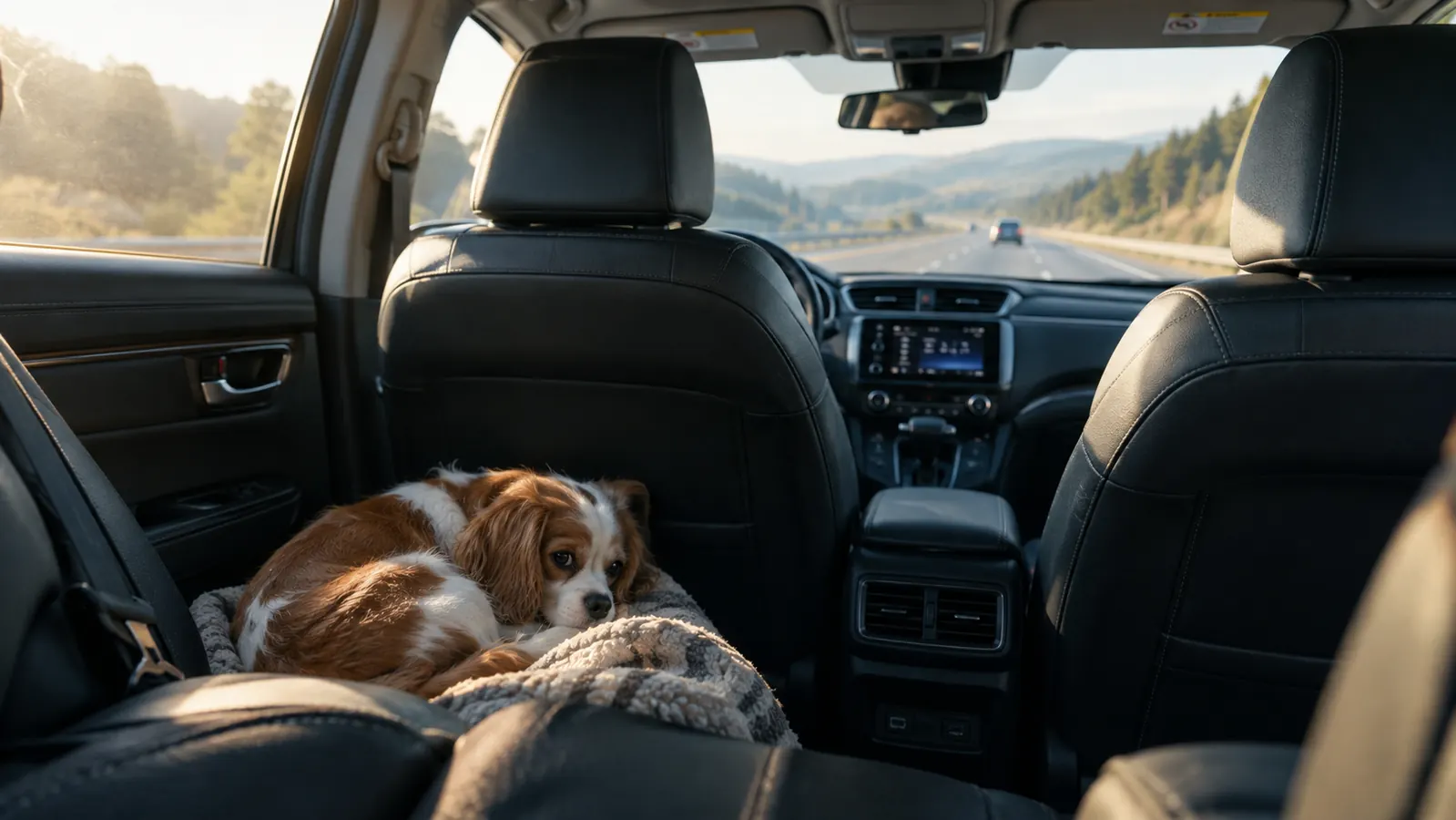
Here is the sentence most reviews skip: my 9-year-old Yorkshire Terrier, Biscuit, was not a dog who hid under the bed. He was a 6-pound dog who panted through every road trip and would not lie down in the back seat of my CR-V until he could see me in the mirror. A friend handed me a 120-count tub of PREMIUM CARE calming chews with the same advice everyone gives: just try it. I tried it for six weeks, and I also asked the vet what she really thought. This is the honest version of that experiment, with the parts left in that do not make good advertising.
My first mistake was hiding the chews from the vet. They sat unopened in my pantry for three weeks while I read the label, then the ingredients, then the online reviews a dozen times. At Biscuit's annual checkup I finally admitted that I had bought them. Her reaction taught me more than the product label did, and it changed how I judged the whole category.
The Quick Verdict
Good for predictable low-grade travel anxiety when you start days ahead. Not the tool for storms, separation fear, or same-day panic.
Amazon Check Today's Price →If a Calm Car Ride Is the Goal, Read This Before You Buy
My six-week notes and the vet's advice in one place, so you can decide whether PREMIUM CARE fits your dog's version of anxiety.
Amazon Check Today's Price on Amazon →How I Used These Chews
I gave PREMIUM CARE only on days that looked stressful: two road trips, one out-of-town vet visit, and a night of storm watches. The label had a dosing table, and I used the amount in the range for Biscuit's weight. I gave it in the kitchen the night before a stressful day, then again the next morning. I did not dose him while he was already pacing in the car, because nothing works that fast.
I kept a small notebook in the glovebox, because I know how quickly I rewrite my own memory. On a quiet Tuesday, Biscuit slept the same as always, no obvious drowsiness, which I now think is the good kind of sign. On the first real trip from Round Rock to Waco, he panted for the first twenty minutes. Then, around mile marker thirty, he lay down in the footwell and stayed there until we stopped. That was a first for him on I-35.
Four weeks in, I realized I was judging success by the wrong metric. The chew was not supposed to stop the panting completely, because no product has to do that to be useful. My notebook showed the metric that mattered: time to settle. The first ride took forty minutes to settle. The third ride took ten. That gave me a yardstick for every product I might try next, and it is the only reason I can write this review without exaggerating.
What the Vet Said When I Finally Asked
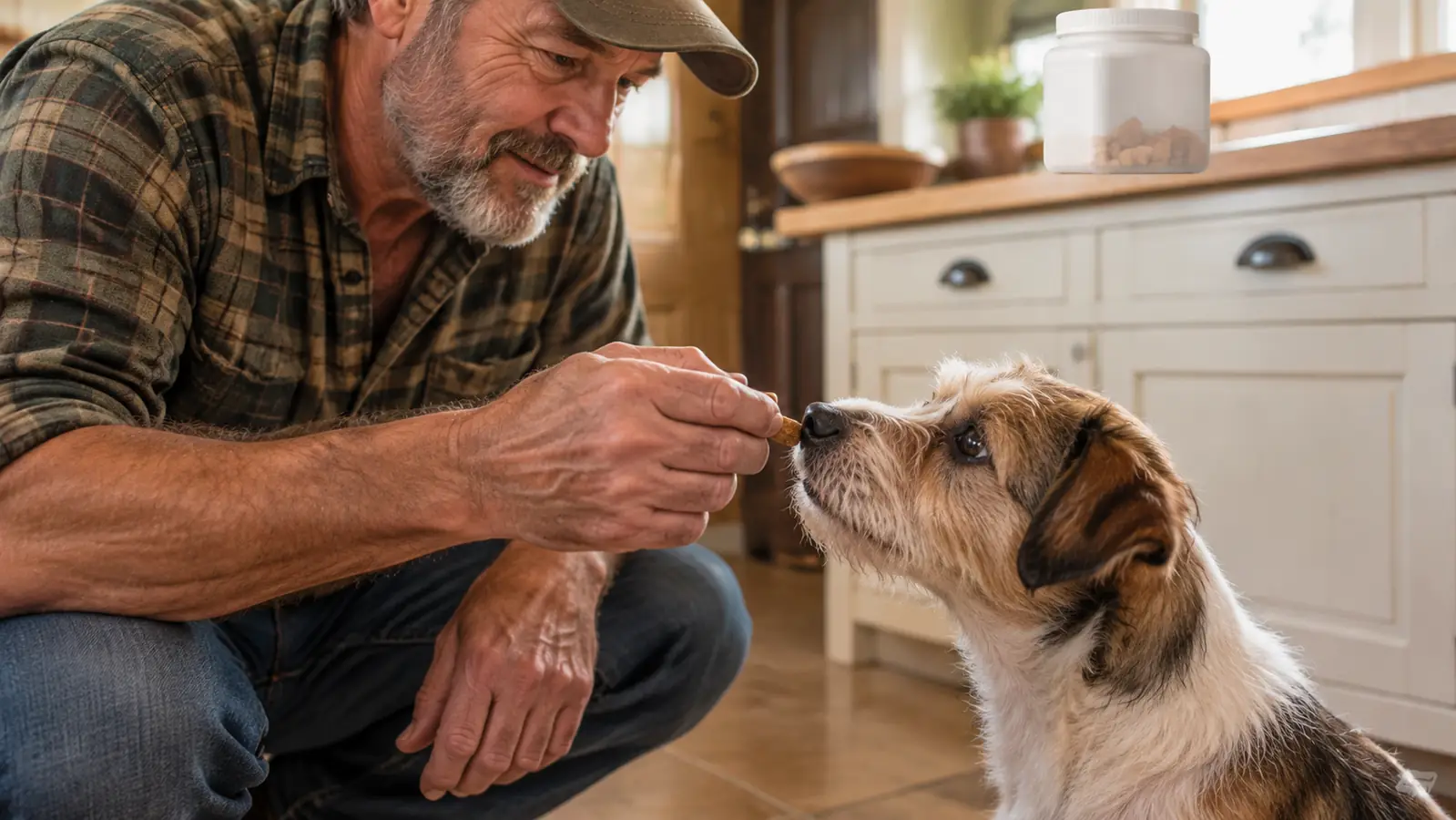
She asked two questions: how often did I give it, and which anxiety was I treating. When I said only on travel days, she nodded. Situational anxiety with a trigger is the user a product like this was designed for, she explained. That was the right match, but then she said the part that belongs in a review: the dog that panics at thunder is not the same patient as the dog that hates the car, and she would not expect one blend to cover both.
I also asked about the range on the dosing table and what it meant for a 6-pound Yorkie. She said to start at the lower end, watch him for four or five days, and look for normal behavior, not for a spaced-out dog. She described PREMIUM CARE as one of the milder blends she saw, which is a compliment for an older small dog. Then she added that if I planned to use it daily for more than a month, she would want blood work to make sure his liver values stayed normal. That is the sentence nobody includes in their glowing review.
She also told me to keep the chews out of reach of Poppy, my other Yorkie. Poppy is five years old and will eat about anything, and she does not have the anxiety. Since the chew was designed for dogs who need it, giving it to a dog who doesn't just to get her to sleep would be the wrong use. I had not thought about that, because I was so focused on Biscuit.
She told me to write the opened date on the tub, because chews lose potency as they sit. She recommended I not use them past the expiration printed on the side, and that I could call her office if Biscuit had any change in appetite or energy. That kind of follow-up is the part of a review you cannot get from strangers, and it is why I am telling you to ask your own vet.
The Onset Timeline Nobody Posts Online
None of the reviews I read prepared me for how slowly this worked on day one. The packaging makes it sound like a tasty way to calm a dog, without mentioning that the dog should already have the chew in his system before the stressful event starts. Based on my notebook, I needed about seventy-two hours of consistent use before I could see a steady difference. On the first ride, he panted for twenty minutes despite the chew. On the second drive, the panting stopped sooner. By the third week, I regarded the hour before a trip as normal instead of bracing myself.
What that means for you is planning. If you are buying these because you have a flight next Tuesday, start them by the weekend. Give the dog a trial day at home first, for two reasons: you need to see how your dog reacts, and you need to learn the fast path from your hand into his mouth before you are standing in a strange place trying to convince a nervous dog to swallow something new. The trial run saved us on the travel day.
Where It Helped, and Where It Did Not
The drives that mattered worked. When PREMIUM CARE was in his system, Biscuit still wanted to watch the road, but he did it from a resting position. On the long leg from Round Rock to Colorado Springs, he actually slept for an hour, which is something he has not done in the back of the CR-V since he was a puppy. I am careful with that sentence because it is the closest to a dramatic claim I have made, and it was real, and it was not because the chew knocked him out.
It did not touch thunder. One night during storm season, Biscuit paced the bedroom from eleven thirty until the rain passed. I gave him the chew earlier that day not for the storm, because I did not know one was coming, and it made no difference during the event. The vet later explained that a predictable trigger is the strength of this product; an unpredicted trigger needs a different plan such as the Thundershirt I already owned, which works from steady pressure.
To be fair to PREMIUM CARE, I should add that I only judged it against his worst moments. The dog I took on the third drive was not the same dog who used to flatten himself in the footwell at the sound of the car door. That change was real even though it was temporary. A product does not have to solve every fear to be worth a place in your travel kit.
The same was true for short flights. In his carrier under the plane seat, he still whined, though not as loudly as the flight before. On a grooming visit, the chew did nothing, which makes sense because being handled by a stranger is not motion anxiety. If you are hoping for one product to cover every fearful moment, these chews are going to disappoint you.
What the Label Does Not Tell You About Small Dogs
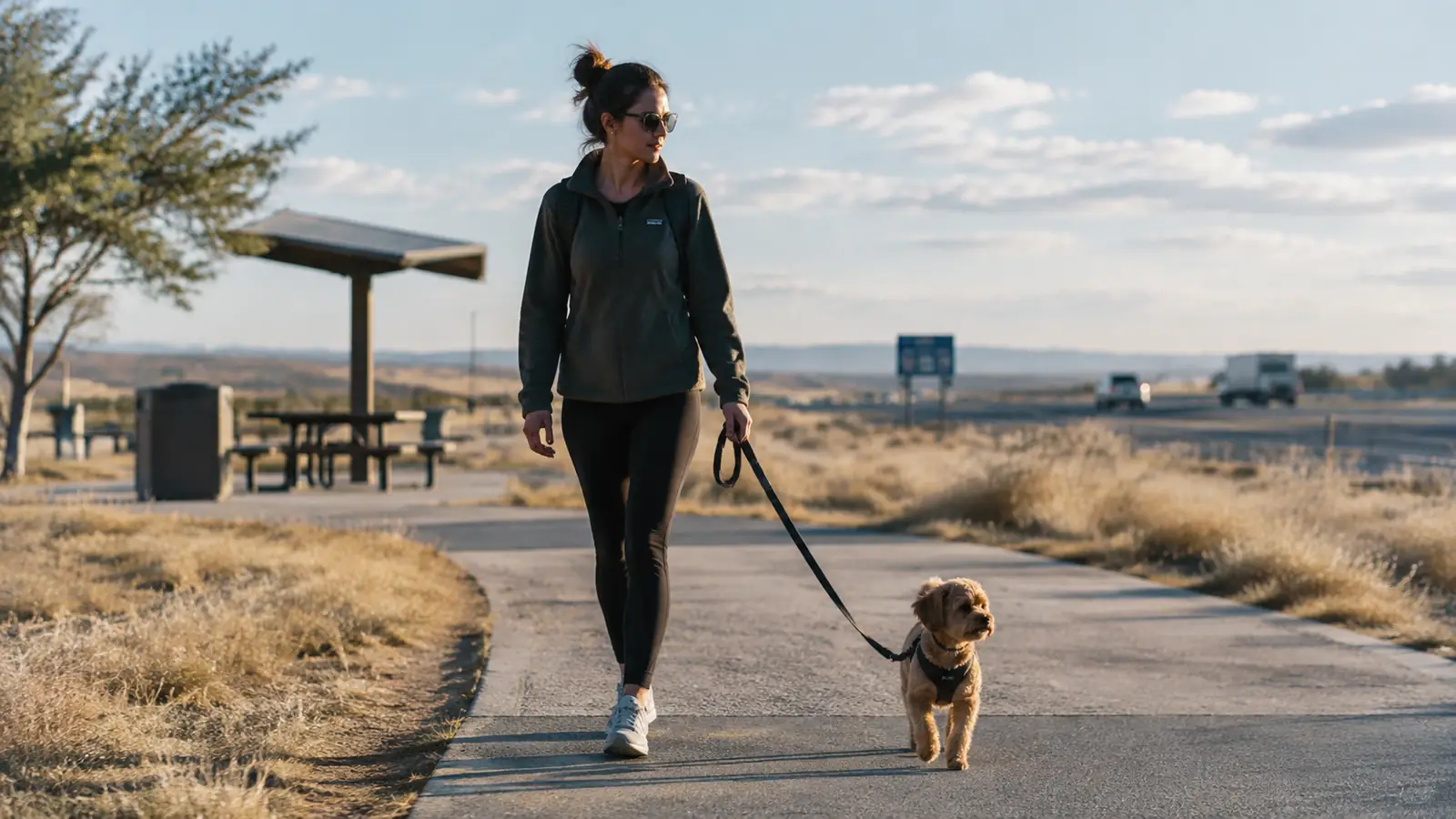
First, taste does not guarantee acceptance. Biscuit took the first chew and then left the second half of it in his bowl. I broke the chews into four pieces and tucked them into a spoonful of plain yogurt, and after that the routine was easy. If your dog is a picky eater, plan for that before the morning you need the product to work.
Second, the amount you buy is more than you need for a trial. Since I use these only on travel days, the 120-count tub lasted much longer than my six-week review window, but I did not give them daily. That means half of my honest review is about how to store them: in the original tub, out of the heat, and clearly away from Poppy, because she is the type of dog to chew through a bag to reach a smell. It is not a comment on the product that I had leftovers. It is a comment on the difference between a six-week review and a long-term supply.
A final small-dog note: because a 6-pound dog metabolizes things quickly, I always gave the chew with food, never on an empty stomach. The vet said this slows the absorption and reduces the chance of an upset stomach. The 120-count tub lasts long enough that there is no excuse to skip that step.
The Alternatives I Kept in Rotation
For Biscuit, I did not make PREMIUM CARE the only answer. The CR-V already had a covered carrier, and the Thundershirt stayed in the glovebox for surprise storms. A calming chew, like the label says, is one piece of a plan. My vet's overall advice was to pair it with the routine that already lowered his stress, which means I kept the same departure time, kept the same seat in the back, and kept the chew in his system, not just in the car.
What surprised me was that the plan did not feel complicated. Once I stopped expecting the chew to do all the work, it was easy to see what it actually did: it took the edge off a predictable day. That simple sentence is the review. It is not a cure. It is not a failure. It is a useful addition to a management plan for a dog who is nervous about travel.
After six weeks, the tub is now in my pantry with the opened date written on it. I will keep it for the next road trip, not for regular use. Biscuit's last four drives have been calmer, and I think PREMIUM CARE deserves part of that credit. The vet deserves the other part, because she was the one who told me to use it on days when the trigger was predictable. If I could go back in time, I would have asked her before I bought the first tub, not after. That single sentence is the most honest paragraph in this review.
What I Liked
- Worked for Biscuit's mild travel anxiety after about three days of lead time
- Did not make him groggy or unsteady at the lower dose
- Vet considered it a milder blend and was fine with short-term situational use
- Chew size was easy to break into smaller pieces for a 6-pound dog
- The 120-count tub lasted through weeks of occasional testing with no stale smell
Where It Falls Short
- Did not help with sudden thunder panic or separation distress
- Needs days of buildup, so it is useless for a same-day emergency
- First chew sat half-eaten in the bowl; taste is not guaranteed
- Daily long-term use should be checked with a vet and blood work, not assumed
Biscuit still panted for the first twenty minutes of the Waco drive. Then he lay down in the footwell and stayed there, and that is the honest result worth buying.
Who This Is For
Buy these if your dog's anxiety is predictable. Biscuit fits that description: he pants on car trips, gets ramped up before the vet, and otherwise rests normally in the house. A calming chew with three days of lead time is a reasonable first step for that kind of dog. The 120-count size matters less than the timing. Start before you need them, judge the results after three travel days, and do not write the product off after the first hour.
I would also say these are for owners who will stay honest about what they see. If you are looking for a medication to knock your dog out for a flight, there are stronger prescription options, and your vet should be the one to guide that choice. If you are looking for a little steadiness on a route your dog already knows, PREMIUM CARE is a fair thing to try.
Who Should Skip It
Skip these if your dog panics during storms, destroys the house when you leave, or reacts with fear-based aggression. Those are behavior patterns that deserve a vet who can recommend stronger support or a certified trainer. A calming chew will not fix them, and pretending otherwise delays the help the dog actually needs. Also skip them if you expect a same-day effect, because the ingredients do not work on a schedule that convenient.
One more skip: this is not the product to buy if you want to test it for the first time during a stressful event. Give yourself at least seventy-two hours of lead time, keep the chews away from the confident dog in the house, and let your vet know what you are doing. If the label cannot promise same-day results, an honest review should not either.
Still Deciding? Ask Your Vet First
Order them if your dog has a predictable anxious habit, but start the conversation with your own vet and give the product three days before you judge it.
Amazon Check Today's Price on Amazon →