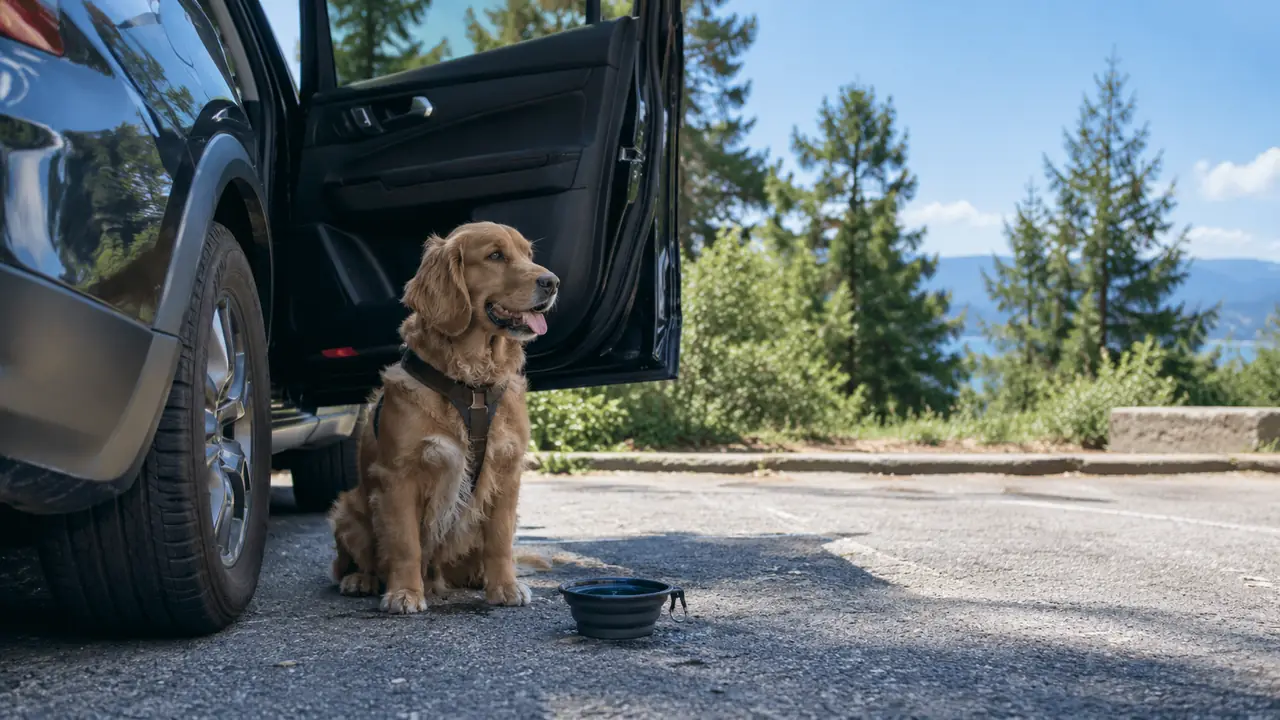
I never planned to be the person who hand-waters a six-pound dog at a rest stop. But last July on a long drive to the Gulf Coast, Biscuit made me one. He is my 9-year-old Yorkshire Terrier, and in the back seat of our CR-V he gets anxious enough that he will not drink from anything strange. Metal bowls at rest areas? No. A cup I held out the window? No. By the time we reached the hotel, he was dehydrated enough to gulp for two minutes straight, and I felt rotten about it. What finally helped was putting water in his familiar SLSON collapsible travel bowl.
Small dogs run out of fluid faster than big dogs because their bodies are small. They also decide not to drink when they are stressed, so you can drive for hours and never see them take a sip. Keeping a small dog hydrated on a road trip is not about buying a bigger water bottle. It is about creating a drinking routine that works with a nervous animal.
Keep the SLSON 2-pack in the door pocket, not the trunk
You want one collapsible bowl for water and one for a few pieces of kibble at rest stops. When the bowls are in the car before you leave, a thirsty dog never has to wait while you dig through the cargo area. Check today's price on Amazon and keep a set in your vehicle.
Amazon Check Today's Price on Amazon →The Routine That Works
Before I list the steps, one thing has to be clear: this is not a military schedule. It is a pattern I worked out after Biscuit refused water for nine hours. The pattern has three parts: offer water when the car is off, use a bowl he knows, and never wait until he looks thirsty. Each step below builds on that pattern.
Step 1: Offer a sip before you leave the driveway
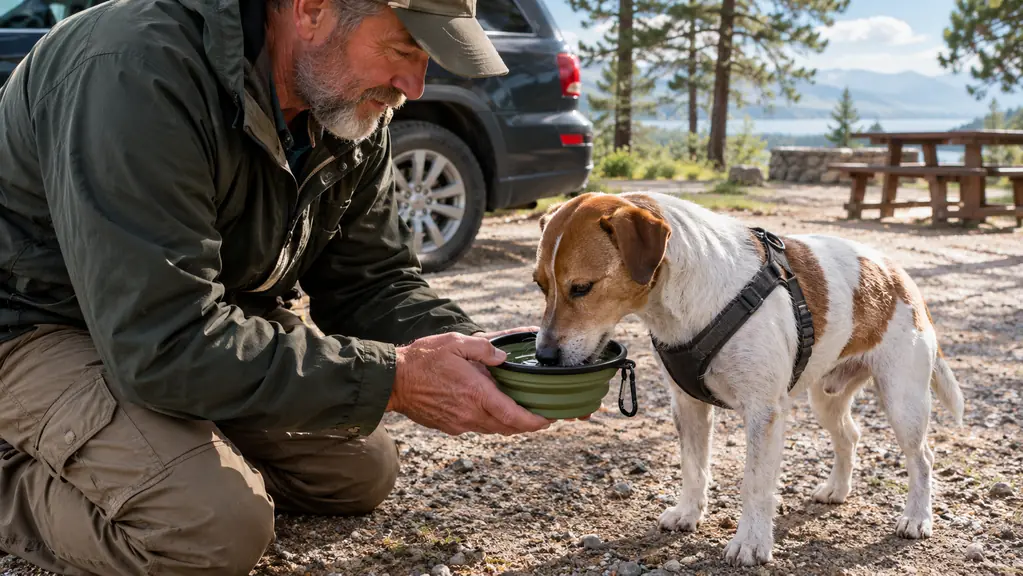
I pour a small amount of water into a SLSON bowl and set it on the floor mat outside the back seat. The car is off, and the garage door has not opened yet. Biscuit will drink at that moment because the world is quiet. Poppy will push in front of him, drink, then try to climb into the bowl. The first sip matters more than any later sip because it tops off their fluid while they are calm.
If you wait until the first rest stop, your dog has already spent an hour or two panting. An anxious small dog often ignores water when the engine is running. Turning the engine off makes the water bowl a different object. I also learned to offer plain water before treats, because treats make thirst worse, and thirst is exactly what we are trying to stay ahead of.
This pre-departure drink does not need to be big. For a six-pound dog, even a few laps matter. If your dog is too excited to drink at home, take five minutes to walk around the block first, then try again.
Step 2: Use the same bowls at home, then bring the pair along
Dogs recognize things by smell. That is why the SLSON 2-pack lives in the kitchen cupboard between trips, not in the glove box. I use one bowl as Biscuit's water dish every morning and the other as Poppy's dish. When trip day arrives, I rinse them, put them in a clean zipper pouch, and set the pouch on the back seat. The bowls carry the smell of home with them.
This may sound like too much planning, but it fixes the problem I had with Biscuit at rest stops. His hesitation was not really about the water temperature. It was about a metal bowl that smelled like every strange dog on the interstate. A familiar bowl does not have that problem. The exact same rim shape and scent that works in the kitchen also works in the car.
Do not wash the travel bowls with strong dish soap right before you leave. Rinse them with hot water and dry them well. Yorkies have an excellent sense of smell, and a detergent smell that you barely notice can make a nervous dog turn away.
Step 3: Stop on a schedule, not when the dog starts panting
The fastest way to dehydrate a small dog is to wait until it looks thirsty. By the time a dog is panting hard at a rest stop, it is already behind on fluids. I set a timer for about 90 minutes. At each stop I walk both dogs on a leash for five minutes, then offer water before we get back on the road. On a six hour drive, that works out to four or five water breaks.
The walk matters. Poppy, who is bold and full of energy, will not stand still for a drink right after being released from the car. After a short walk, she is calmer and ready to eat or drink. Biscuit, who needs to keep an eye on me, is calmer when we stay near the car. I offer water by the back bumper, not at a noisy picnic table.
A dog resting in an air-conditioned car can easily go hours without showing thirst. If you rely on the dog to ask, you will miss the early signs. I keep the timer where I can see it and stop even when both dogs look perfectly fine.
Once I put the same bowls on the same towel at every stop, Poppy stopped treating water as an interruption. She now drinks first, then sniffs the grass.
Step 4: Make the rest stop drink comfortable and mess free
If you set a full bowl on gravel, a small dog has to crouch low, gravel pokes its chin, and the water picks up dirt. Poppy will take one look at that and walk away. I place a small towel on the ground and set the SLSON bowl on the towel. If the ground is wet, I sit on my heels and hold the bowl at the dog's mouth height. I also keep one foot on the leash, because Poppy has tried to wander off in the middle of a drink.
Pour a small amount of water at a time. Tilt the bowl slightly so the water pools in one low corner, shallow enough for Biscuit to reach without dunking his whole face. When he pauses, add a little more. It sounds delicate, but after one trip it becomes automatic, and the whole drink takes less than thirty seconds.
Keep the water bottle in a door pocket where you can reach it without unbuckling your seat belt. I use a two liter bottle with a narrow spout. When the bowl needs more water, I pour it on the pavement beside the car, never in the back seat, so no one has to sit in a puddle for the next hour.
Step 5: Watch for the quiet signs of dehydration
A dry nose is not the reliable clue it is often made out to be. Better clues for my dogs are a slow walk back to the car, a dull look in the eyes, and skin that stays tented when I gently pinch the loose skin behind the neck. If the gums feel sticky instead of wet, or the dog turns down a favorite treat, we stop and take a longer break.
Once a thirsty dog starts drinking, do not let it gulp a full bowl at once. A small dog can take in too much water too fast and throw it all back up, which makes the problem worse. I allow a few laps, pause for thirty seconds, then offer more. For a healthy dog this works well.
If you have been driving through serious heat and the dog is listless, does not want to stand, or seems confused, do not wait. Get to an air conditioned building, offer water in very small sips, and call your vet. Dehydration in a six or eight pound dog can move fast.
The One Rule I Repeat on Every Trip
The rule is to offer water every time the car is turned off, even if the dog does not seem thirsty. On our trips, that rule catches the moment when a little water is easy, before thirst turns into a problem. It also keeps the water bowl from becoming a production. Biscuit knows that when the engine stops, a bowl may appear, and that predictability is what makes him drink.
I say the rule out loud so I do not forget it while I am juggling leashes and keys. You will already be walking the dog at every stop, so adding a bowl takes twenty seconds. The idea is to make drinking part of the stop, not a separate task that gets skipped.
What If They Still Won't Drink
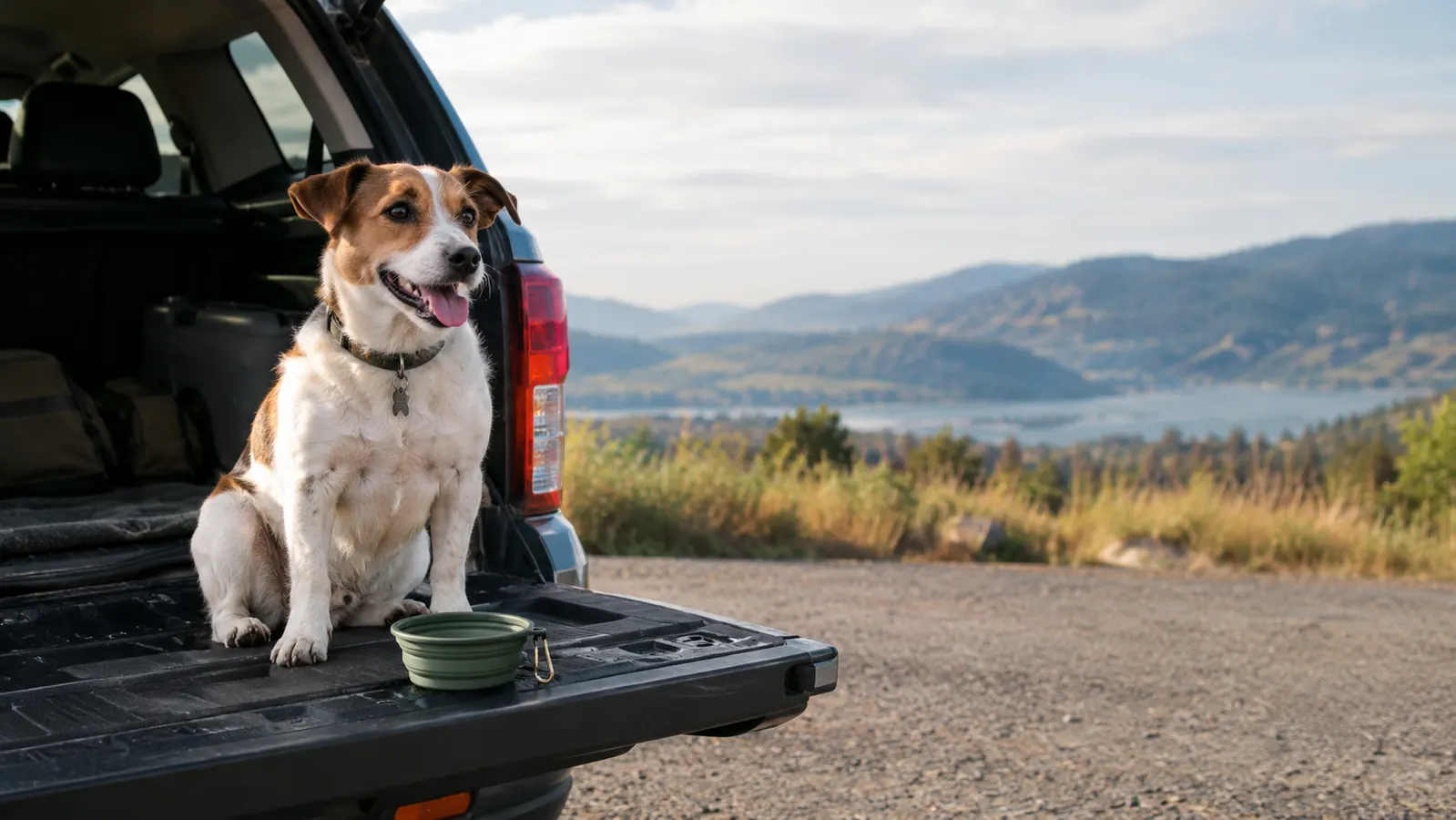
If your dog is healthy and still refuses water at the first few stops, do not panic. Some dogs simply need more time to settle. I have had trips where Biscuit does not take a real drink until the third stop, then makes up for it by drinking well at the hotel. What helped was not pressure. It was quiet and patience. I put the bowl on the ground, stepped back, and let him decide.
You can also offer water on a damp washcloth. Let the dog lick moisture from the cloth. It is not a replacement for drinking, but it can keep the mouth from getting dry when the bowl is being ignored. Wet food with extra water at the end of the day is another way to catch up.
What Else Helps
Hydration starts before you leave the house. On travel mornings I add a small splash of water to the breakfast kibble. It is an easy way to get fluid in before the engine turns over. I also do a short test drive near home at least once so the routine is not brand new on the day of a six hour trip.
Do not put a loose bowl of water on the seat while the car is moving. It will spill at the first turn. If a dog needs moisture during the drive, offer a very small amount of water from a bottle while you are parked at a stop. Moving water breaks in the car are not worth the mess or the choking risk.
The second bowl in the SLSON 2-pack is useful for more than water. I put a few pieces of dry kibble in it at rest stops. A small snack gives a nervous stomach something to work on and keeps the dog from staring at our roadside lunch. For dogs prone to car sickness, an empty stomach can be worse, so a bite of kibble after water helps settle things.
Finally, keep the routine the same on the way home. If the water breaks happen at similar intervals, the trip starts to feel predictable. A predictable trip is a calmer trip, and a calmer small dog will drink more easily.
Give these bowls a permanent spot in your road trip kit
One for water, one for kibble, both small enough to hand to your dog without a spill. For a small dog, that is the difference between a thirsty drive and a comfortable one. Check today's price on Amazon and have a set ready before your next trip.
Amazon Check Today's Price on Amazon →