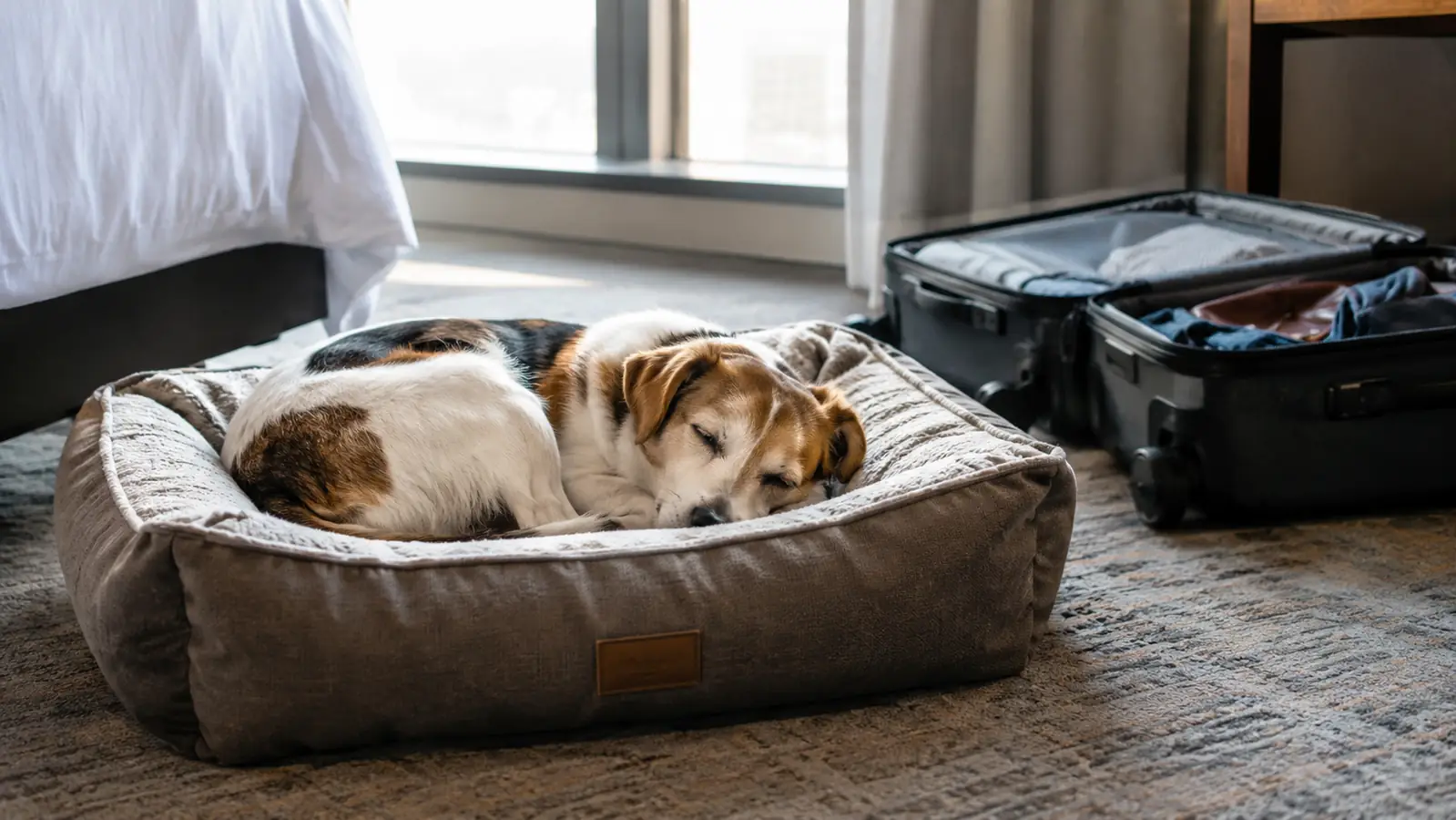
I did not plan to spend an afternoon zipping and unzipping a dog bed. But that is how the Furhaven travel bed earned this review. Biscuit is nine, small, and a picky sleeper whenever we are away from home. I wanted something foldable for the back of my Honda CR-V and for the floor of my sister's guest room near Colorado Springs. What I did not expect was that the carry bag zipper would become the whole story.
Most dog beds are reviewed while they lie flat in a living room. I wanted to know what happens after a few hundred miles on the road, after being stuffed into a carry bag at six in the morning, after a wash cycle that has to remove road dust and dog hair. Furhaven sells this bed in a small size that appealed to me because Biscuit only weighs six pounds and Poppy weighs eight. Both fit on the same surface, though Poppy believes she owns the middle. This is the honest version of that test.
The Quick Verdict
Genuine comfort and washable fabric, but the carry bag zipper needs a careful fold and the center fill settles after a month.
Amazon Check Today's Price →See the Furhaven Travel Bed Price and Delivery Options
If a light, washable, packable bed for a small dog fits your next trip, the price today is worth checking before you buy.
Amazon Check Today's Price on Amazon →How I've Used It
For six weeks this spring, the Furhaven travel bed earned its keep on three different trips. I used it in the back seat of my Honda CR-V, on hotel floors, on the floor of a wood frame rental, and on top of a sofa that smelled like dust. By the time the test was over I had washed it four times and packed and unpacked it more times than I can count. That range is what I wanted, because a travel bed only matters when real life gets messy.
The first trip was to Rockport in April, a drive of about two hundred twenty miles from Round Rock. The bed rode in the back seat next to a plastic crate and a cooler. Biscuit climbed on within a minute, turned around twice, and lay down with his head toward the window. Poppy immediately jumped on top of him, because that is how she tests any new surface. Neither dog spent more than a few minutes on the bare leather, which is not true on drives without a bed.
At the hotel, the bed went on the floor beside my cot. I chose that spot because Biscuit sleeps better when he can see me and because the room had cold tile. Poppy shoved her nose under the edge, lifted the corner, and tried to create a cave. When that failed she flopped onto the middle and closed her eyes. Both dogs stayed on the bed through the night, which is unusual for Poppy, who normally wakes at five and paces. I recorded that as a promising start rather than proof, since a long drive can make any location look good.
A few weeks later I packed the bed for an overnight in Round Top, about ninety minutes from Round Rock. The rental had a wood floor and one drafty window. Poppy ignored the bed for the first hour, then discovered the small dent that Biscuit had already made and settled into it. Biscuit, however, chose a spot on the floor near the door, his usual guarding position. The bed did not cure his need to watch the entrance, and I did not expect it to. That night taught me that a travel bed is not a substitute for routine, but it did give Poppy a clean place to nap.
The most useful trip came in May, when we spent three nights in a cabin near Marble Falls. The sofa cushions smelled of dust and furniture polish, so I put the Furhaven bed on the sofa as a barrier. The nonslip printed bottom gripped the fabric well enough that the bed did not slide when Biscuit jumped on or off. Rain kept us inside for most of one afternoon, and both dogs napped on the bed in shifts, maybe three total dog hours. By the time we got home the bed had collected enough dust and pollen to make a white tissue gray, so it went straight into the wash.
The Carry Bag and the Zipper Test
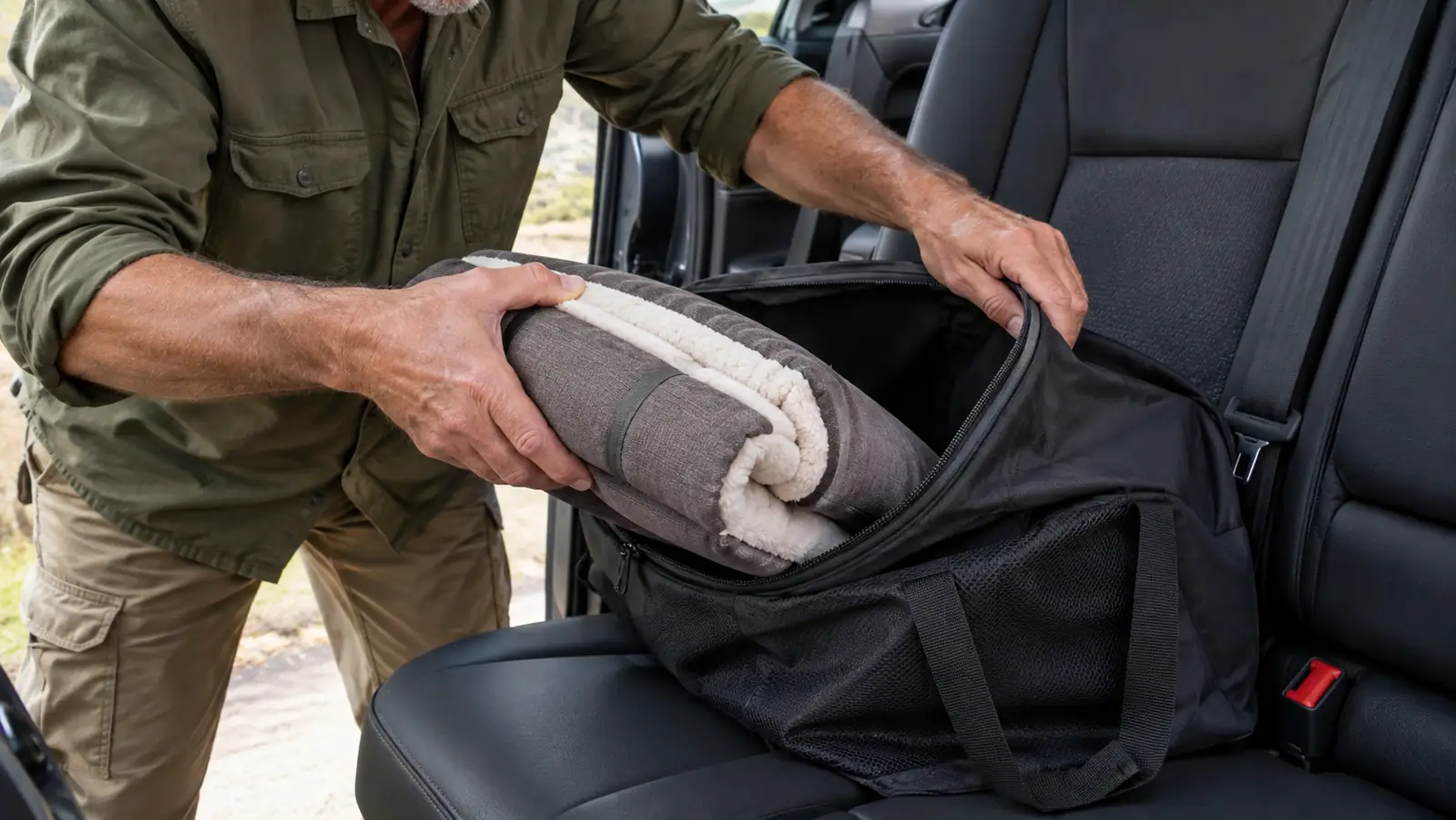
After the first hotel night I did what the label instructs. I folded the bed into thirds, aligned the edges, and tried to slide it into the nylon carry bag. The zipper caught halfway and stopped. I pulled it back, pushed the folded fabric deeper, and tried again. It caught in the same place. It took me about forty seconds of working the zipper backward and forward before I got it closed, which does not sound long unless you are standing in a hotel room with a six pound Yorkie waiting for breakfast.
I examined the bag after I got home. The opening is just slightly shorter than the widest folded section of the bed. When you push the whole bundle in at once, the corner of the blanket rises and slips between the zipper teeth. It is not a broken zipper. It is a mismatched dimension that turns a simple task into a puzzle. Over the next two weeks I packed and unpacked the bed at least ten times, varying my folding routine. The zipper never broke and never came off its track. It only caught when I was careless.
The fix is simple once you know it. Fold the bed in the exact order printed on the sewn in label, then let one corner feed into the bag first before you slide the rest in. When I did that slowly, the zipper closed smoothly every time. When I shoved the bed in quickly, the same corner caught about half the time. In other words, the zipper is not defective, but it does require a technique that the product description does not mention. I want to be direct about this because some online reviewers call the bag useless, and I think they never found the edge first trick.
The zipper never broke in my testing. It caught on a folded corner half the time when I rushed, and never when I fed the bed in edge first. That is a design quirk, not a reason to send it back.
What I Liked
- Folds flat enough to slide into a duffel bag or the footwell of a back seat
- Washable cover held up through four wash cycles with no loose stitching
- Nonslip printed bottom stayed put on a car seat, hotel carpet and a sofa cushion
- Two small dogs can share it, and the low profile does not intimidate an anxious traveler
Where It Falls Short
- Carry bag zipper catches on the folded corner unless you use the edge first trick
- Center fill develops a shallow depression after several weeks of daily use
- Carry bag has a short handle and is not padded enough to protect the bed in checked luggage
- Not enough support for a dog over fifteen pounds
Wash Cycles: Four Washes In
Between trips, both dogs shed enough hair to fill a small envelope. I washed the bed four times in six weeks, always on cold with a gentle cycle, and line dried it in the shade. After the first two washes, the fabric looked close to new. The stitching at the corners and around the edges held tight. The printed nonslip dots did not peel or crack. I expected some loose threads at this price point, but I found none.
The third wash is where the bed started to show its age. The fiberfill in the middle took longer to loft up after I pulled it off the line. By the fourth wash, a crease across the center, the crease that follows the carry bag fold, would not shake out completely. It is cosmetic. The bed still supports a six pound dog comfortably, but it no longer looks like the day I bought it. That is a fair trade for a bed that packs flat, but buyers should know it.
What Surprised Me, in a Good Way
Two things genuinely surprised me. The first is the smell test. I half expected a chemical odor when I unzipped the bag for the first time, based on past experiences with cheap padded gear. This bed smelled like new fabric for an afternoon and then faded to nothing. The second surprise is the nonslip bottom. I assumed the printed dot pattern would slide on leather, but it held the bed in place while the dogs jumped off, which is more than the crate mat in our other vehicle can claim.
The bed is also lighter than I expected for something with a washable cover and a cushioned middle. I did not put it on a scale, but it was easy to tuck under one arm with the carry bag. The bag has a short web handle rather than a shoulder strap, so I would not want to walk through an airport with it hanging at my side. It fits inside a standard tote bag, which in my case was enough to bring it on the plane as a personal item. Furhaven's description calls the bag a carry bag, not a luggage piece, and that distinction matters.
The Comfort Question and the Flattening Problem
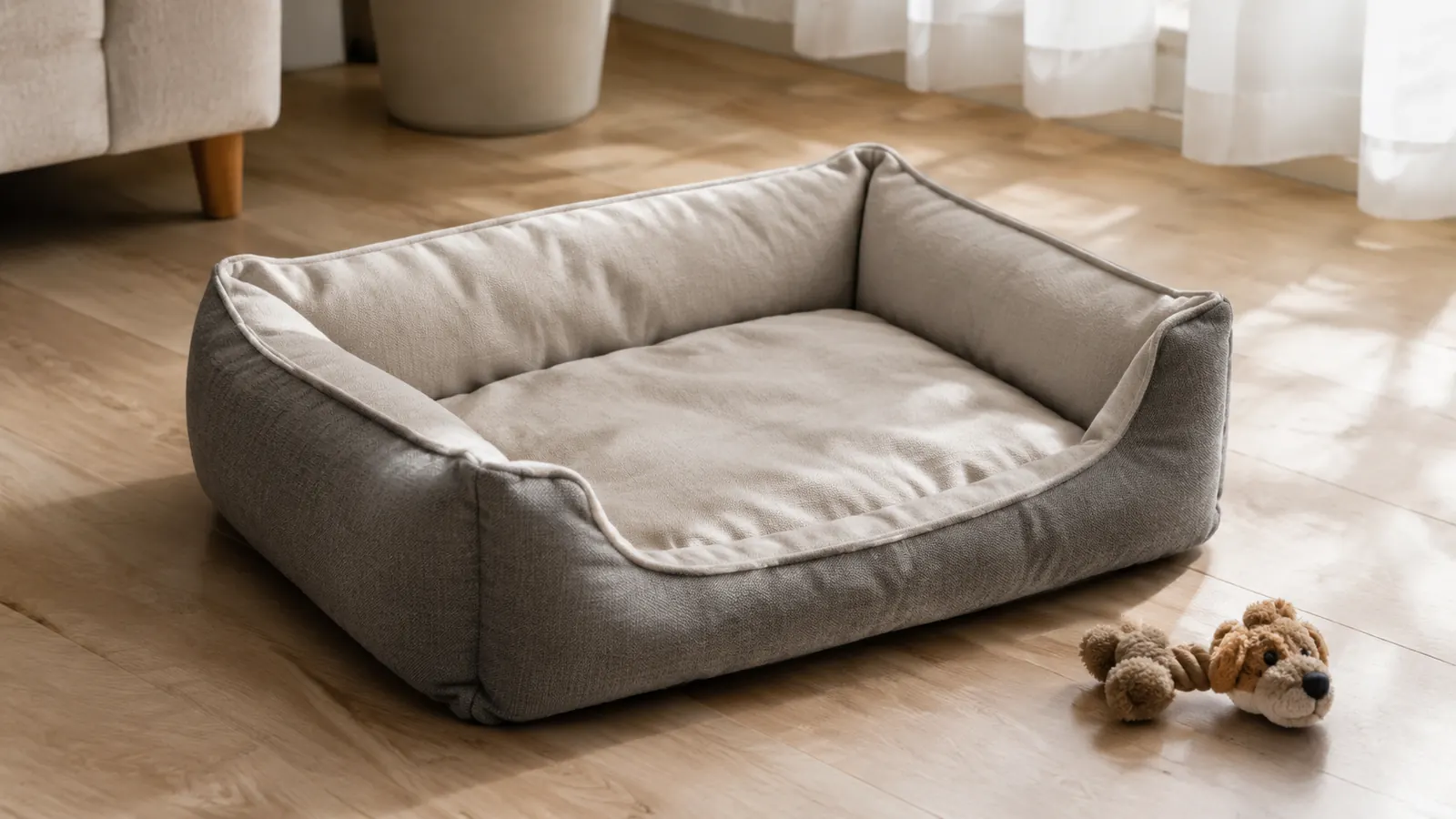
Now let me tell you what no number of five star reviews prepared me for. The fill is dense polyester fiber, not memory foam. On a new bed, Biscuit sinks half an inch when he settles. Poppy, at eight pounds, sinks a little deeper. The result is comfortable enough for a small dog with healthy joints, but it is not the marshmallow feel of a thick orthopedic pad. If you buy this expecting the same support as a two inch memory foam mat, you will be disappointed.
After six weeks of use, the middle developed a shallow depression about the size of a dinner plate. Biscuit sleeps in the same curled spot every night, so the compression is concentrated. The depression does not hurt the dog, and it is not visible from across a room, but you can feel it when you run a hand across the surface. Rotating the mattress each week and storing it loosely instead of folded tight would slow the flattening. I did not rotate mine because I wanted to see how the bed held up under ordinary neglect.
How the Folded Bed Travels
One reason I chose this bed over a rolled foam mat is that it folds flat rather than rolling into a tube. Folded in thirds, the Furhaven bed becomes a rectangle slightly larger than a sheet of printer paper and maybe three inches thick. That shape slides into the front pocket of a duffel bag more easily than a round tube does. It also stands on its edge at the bottom of a backpack, which keeps it out of the way of a laptop. I tested it in my usual weekend bag, a canvas duffel with a flat bottom, and it took up less room than a folded sweater.
The carry bag is not a compression sack. It simply holds the folded bed in place. When I used the bag alone and then placed it inside the duffel, the bed stayed compact. When I skipped the bag and tried to stuff the loose bed into the duffel, it unfolded and caught on the handle. That is a small argument for using the bag even though the zipper annoys me. If you plan to carry the bed alone, the handle is adequate for short distances but not comfortable for a fifteen minute walk through a parking lot.
What I Would Change
If Furhaven asked me for a list, the first change would be an inch longer carry bag. That one modification would eliminate the zipper catch completely and make the bed friendlier for older owners with weaker hands. The second change would be a slightly firmer fill, even if it added a few ounces to the total weight. I do not need a firm orthopedic slab for six pound dogs, but I would like the middle to keep its loft for more than a month.
The third change is small but meaningful. The printed care tag sits on an inside corner and is easy to miss. If the fold order were printed on the outside of the bag instead of only on the bed's interior tag, more people would find the technique that makes the zipper work. I say this as someone who owns a seam ripper and has removed plenty of scratchy tags. This bed needs its instructions where you can see them before you pack, not after you are frustrated.
Does It Work in a Crate?
I also tried the bed inside the collapsible crate we use for road trips. The small size fits a standard 24 inch crate with a few inches to spare on each side. Poppy immediately claimed it as a nest and dragged a toy onto it. Biscuit stood on the edge and looked skeptical, which is his normal expression. The bed is thin enough that the crate latch does not catch on it, and the nonslip bottom keeps it from bunching when the dogs shift around. If you use a crate in the car, this bed gives more padding than the crate liner alone.
Who This Is For
The Furhaven travel bed is a good fit if your dog is under fifteen pounds and travels with you at least a few times a year. It is light, washable, and flat enough to fit in the footwell of a car. It gives a small dog a familiar surface that does not smell like a rental room or a dusty sofa. If your dog settles best on a specific texture, the soft side of this bed is a safe bet because it is smooth, not fuzzy. I used the bed in a car, a hotel, a rental house, and on top of a sofa, and it worked in all four.
Who Should Skip It
Skip the Furhaven travel bed if your dog is a heavy chewer. The polyester cover will not survive a dog who likes to rip seams. Skip it if your dog weighs more than fifteen pounds, because the fill will bottom out and the zipper catch will be harder to manage with a thicker folded package. And skip it if you need a home bed that keeps its shape for years, because this is a travel accessory first. Buy a thick memory foam pad for the crate and keep this one for the road.
Final Honest Verdict
After six weeks, four washes, and three trips, I still reach for the Furhaven travel bed before I pack the car. It is imperfect but useful. The zipper asks for a little patience, the center fill flattens faster than a thicker bed would, but it does the job I bought it for: giving a small dog a clean, familiar, packable place to rest. I would recommend it with the same caveats I would tell a friend, and that is the point of this review.
Decide Based on the Honest Tradeoffs
The Furhaven travel bed is a light, packable solution with a zipper that needs a little patience. If that tradeoff works for you, check the current price on Amazon before you book your next trip.
Amazon Check Today's Price on Amazon →